
My Honest Experience After 15 Months of Using Both
I tested both Perplexity vs Claude extensively over the last 15 months, switching between them daily, running identical prompts through both, and pushing each tool through real work tasks that actually mattered. I used them for research, writing, content planning, document analysis, coding help, fact-checking, and complex reasoning challenges. Not casually. Not just for fun. I relied on both tools for actual professional output across dozens of projects.
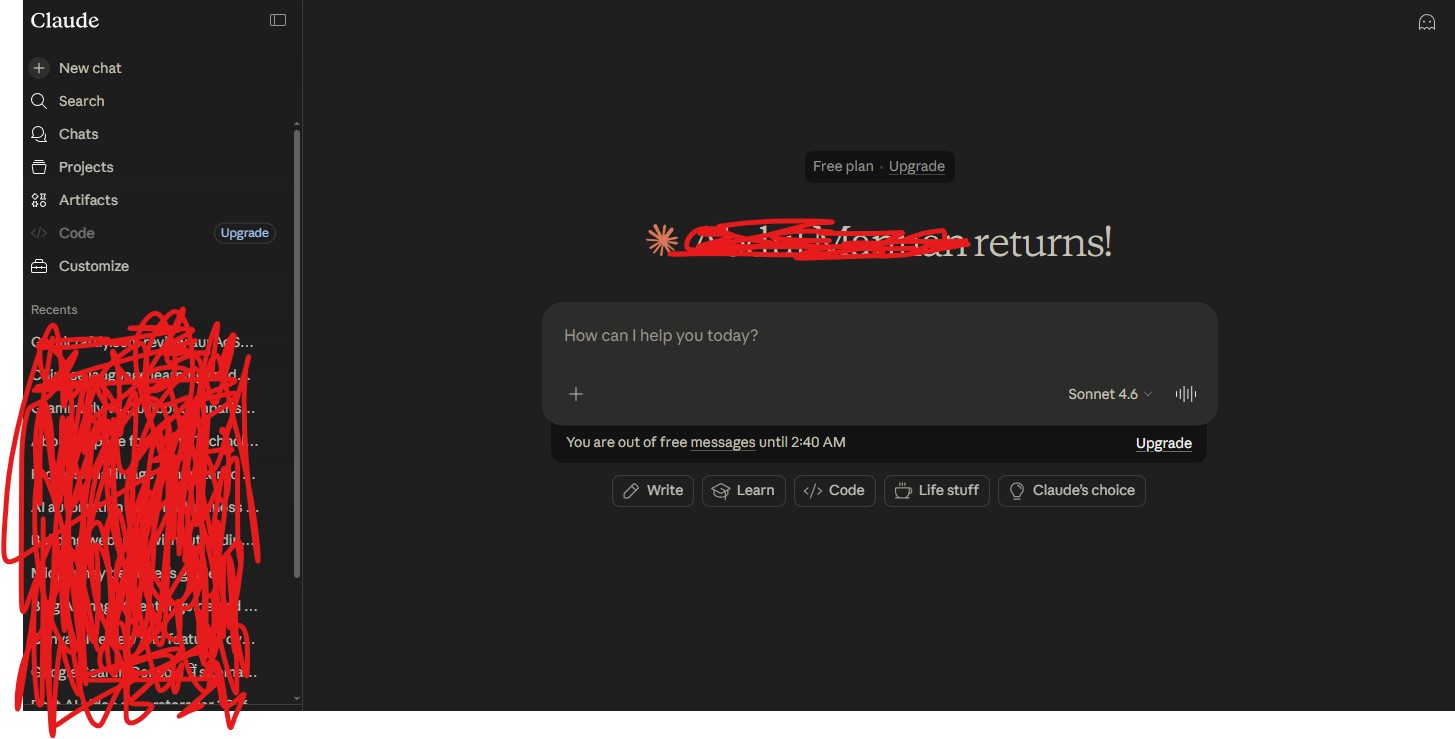
When the Perplexity vs Claude debate comes up in conversations about AI tools, most people have tried one and assume the other is basically the same. After 15 months of side-by-side usage, I can tell you with confidence: they are fundamentally different tools designed for very different jobs. Choosing the wrong one for your specific workflow will leave you frustrated — not because either tool is bad, but because you are using a hammer when you need a scalpel, or vice versa.
This guide is my complete, experience-driven breakdown of Perplexity vs Claude, what each does well, where each falls short, and which one deserves a place in your daily toolkit.
What Is Perplexity AI?
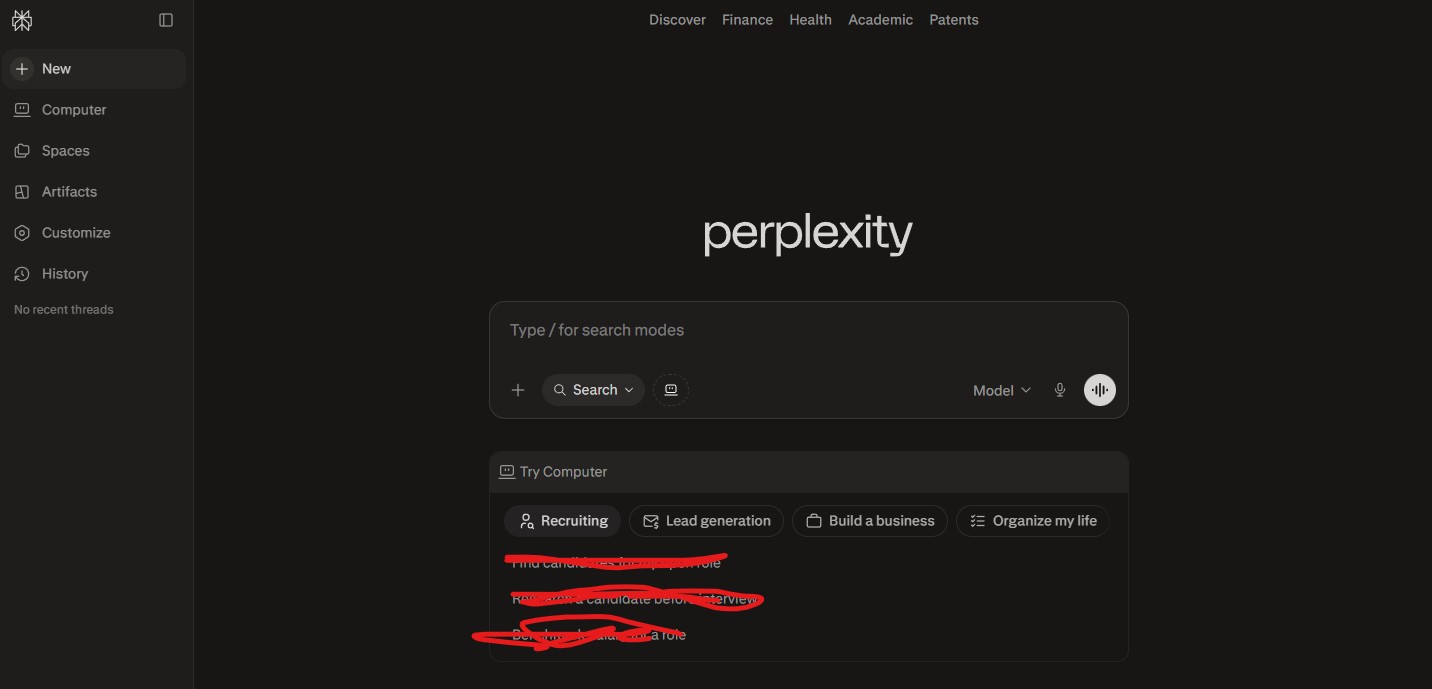
Perplexity AI is an AI-powered answer engine launched in 2022. It combines the capabilities of a large language model with real-time web search, producing answers that are sourced, cited, and linked to the original web pages. Think of it as a smarter, more conversational version of a search engine — one that reads the web for you and synthesizes the most relevant information into a clear, organized answer.
Perplexity is not built primarily for creative writing or long-form content generation. It is built for one thing above all else: giving you accurate, current, sourced answers to specific questions quickly.
The free plan includes standard searches with web access. The Pro plan ($20/month) unlocks more powerful AI models (including GPT-4o and Claude), longer context, file uploads, and a higher volume of Pro searches per day.
What Is Claude?
Claude is an AI assistant developed by Anthropic, a safety-focused AI research company founded by former OpenAI researchers. Unlike Perplexity, Claude is not a search engine hybrid, it is a pure large language model designed for deep, nuanced conversation, long-form writing, document analysis, reasoning, and thoughtful assistance across a wide range of tasks.
Claude is known for its strong performance on complex writing tasks, its ability to handle very long documents within a single conversation, and its tendency to give balanced, carefully reasoned responses rather than quick, surface-level answers.
The free plan offers daily usage with access to Claude’s core capabilities. The Pro plan ($20/month) unlocks Claude’s most powerful models, higher message limits, and priority access during peak times.
Perplexity vs Claude: Head-to-Head Comparison
1. Research and Real-Time Information
This is where Perplexity wins — clearly and decisively.
Over 15 months of testing, every time I needed current information — recent news, updated statistics, live market data, newly published studies — Perplexity was my immediate, choice. It pulls form the live web, cites every source with a clickable links, and synthesizes information from multiple pages into a clean, readable answer. I never had to wonder where the information came from.
Claude, on the other hand, has a knowledge cutoff. On the free plan, it does not have real-time web access, which means it cannot tell you what happened last week, what a product costs today, or what the latest research says about a topic published recently. For current information, Claude is genuinely the wrong tool.
I tested this directly: I asked both tools the same question about a recent regulatory change in the tech industry. Perplexity gave me a sourced, accurate, up-to-date answer in seconds. Claude gave me a thoughtful response based on information it had from before its cutoff — accurate for its time, but not current.
Winner: Perplexity — no competition for real-time research.
2. Long-Form Writing and Content Creation
This is where Claude dominates.
I wrote dozens of long-form articles, detailed reports, client proposals, and creative pieces using both tools over 15 months. The difference in output quality for writing tasks is significant. Claude produces text that reads as genuinely human — varied sentence structure, appropriate tone shifts, natural transitions, and a sense of voice that Perplexity simply cannot match.
Perplexity is not designed for long-form writing. Its outputs are structured like sourced research summaries — great for reading comprehension, poor for producing polished prose. When I asked Perplexity to write a 1,000-word article on a given topic, the result was usable but clearly AI-formatted: bullet-heavy, citation-dense, and lacking the kind of narrative flow that good writing requires.
Claude, when given the same task, produced something that needed far less editing. The tone was consistent, the structure was logical, and the writing felt intentional rather than assembled.
Winner: Claude — the gap in writing quality is substantial.
3. Document Analysis and Summarization
Claude handles long documents better than almost any other AI tool I tested over 15 months — including Perplexity.
Claude’s context window is one of its most powerful features. I regularly uploaded PDFs — research papers, legal contracts, business reports — and asked Claude to summarize sections, identify key arguments, compare claims across multiple pages, or rewrite dense text in plain language. It handled documents up to 40–50 pages without losing track of earlier content. The summaries were accurate, organized, and genuinely useful.
Perplexity’s Pro plan does offer file upload capability, but my experience with it for deep document analysis was less consistent. It handles shorter documents and web-sourced content well, but for analyzing a complex, multi-section document where you need to track arguments, spot contradictions, or extract specific details across many pages, Claude is the stronger tool.
Winner: Claude — especially for complex, multi-page documents.
4. Fact-Checking and Source Verification
Perplexity is the only AI chatbot in this comparison that was actually built for trustworthy, verifiable fact-checking — and it shows.
Every answer Perplexity produces comes with numbered citations that link directly to the original sources. You can click any citation, read the source yourself, and verify the information independently. Over 15 months, I used Perplexity extensively for fact-checking claims before publishing content, and the sourced format saved me from several errors I would have otherwise missed.
Claude, by contrast, does not cite sources for its responses. It draws from its training data and presents information confidently — but without links or references you can verify. This does not mean Claude is inaccurate (it is generally reliable for well-established knowledge), but it does mean you have no easy way to trace where a specific claim came from. For anything where accuracy is critical and verifiability matters, Perplexity is the safer choice.
Winner: Perplexity — citation-backed answers are a structural advantage.
5. Coding and Technical Help
Both tools handle coding tasks competently. After 15 months of using both for code-related tasks, my honest assessment is that Claude has a slight edge for complex, multi-step coding problems.
Claude excels at understanding the full context of a coding problem. When I shared a long code snippet with multiple issues and asked for a review, Claude identified not just the obvious bugs but also structural problems, inefficiencies, and edge cases I had not thought to ask about. Its explanations were detailed and educational — not just “here is the fix” but “here is why it was broken and how to think about it differently.”
Perplexity handles straightforward coding questions well — explaining a function, looking up a library’s syntax, finding current documentation for a framework. Its real-time web access is genuinely useful for checking the latest version of a package or finding updated documentation. But for deep debugging and multi-step problem solving, Claude’s reasoning depth gives it an advantage.
Winner: Claude (slight edge) — Perplexity’s web access is useful for lookups, but Claude reasons through complex problems more thoroughly.
6. Conversational Depth and Reasoning
Over 15 months, one difference became increasingly clear: Claude thinks more carefully before responding.
When I asked Claude nuanced questions — ones without a clean, obvious answer — it would often acknowledge complexity, present multiple perspectives, note areas of genuine uncertainty, and arrive at a thoughtful position. This made it far more useful for tasks like strategic planning, ethical reasoning, analyzing arguments, and exploring ideas from multiple angles.
Perplexity’s conversational depth is adequate for standard Q&A but not built for extended intellectual exploration. Its strength is synthesis and speed — pulling relevant information together quickly. Deep, reflective conversation is not what it was designed for.
Winner: Claude — for nuanced reasoning and extended intellectual discussion.
7. Speed and Interface Experience
Perplexity is faster for quick answers. The interface is clean, search-focused, and optimized for getting information in the shortest time possible. For a quick research question, Perplexity consistently delivered in 5–10 seconds with sources ready to explore.
Claude’s responses take slightly longer for complex tasks — which is understandable given the depth of processing involved. The interface is clean and conversation-focused, better suited for extended back-and-forth than rapid-fire queries.
Both interfaces are polished and easy to use. No learning curve for either.
Winner: Perplexity for speed on quick queries. Claude for extended, complex conversations.
Pricing Comparison
| Feature | Perplexity (Free) | Perplexity (Pro) | Claude (Free) | Claude (Pro) |
| Price | $0 | $20/month | $0 | $20/month |
| Real-Time Web Access | ✓ Yes | ✓ Yes | ✗ No | Limited |
| Cited Sources | ✓ Yes | ✓ Yes | ✗ No | ✗ No |
| File Upload | ✗ No | ✓ Yes | ✓ Limited | ✓ Yes |
| Long Context Window | ✗ No | Moderate | ✓ Yes | ✓ Yes (200K) |
| Image Generation | ✗ No | ✓ Yes | ✗ No | ✗ No |
| Best Model Access | Standard | GPT-4o / Claude | Standard | Claude 3.7 |
| Daily Usage Limits | Moderate | Higher | Moderate | Higher |
Perplexity Pros and Cons
Pros
1. Real-Time Web Access — Always On
2. Every Answer Is Cited and Sourced
3. Excellent for Rapid Research
4. Pro Plan Includes Multiple AI Models
5. Clean, Distraction-Free Interface
Cons
1. Weak Long-Form Writing Output
2. Limited Deep Reasoning
3. Free Plan Search Limits
4. Not Ideal for Document Analysis
My Rating: 4.1/5
Claude Pros and Cons
Pros
1. Best-in-Class Writing Quality
2. Exceptional Document Analysis
3. Deep Reasoning and Nuanced Responses
4. Honest About Uncertainty
5. Natural, Human-Like
Cons
1. No Real-Time Web Access on Free Plan
2. No Source Citations
3. Free Plan Daily Limits
4. No Built-In Image Generation
My Rating: 4.2/5
Frequently Asked Questions: Perplexity vs Claude
Q1: Which is better for research — Perplexity or Claude?
Perplexity is significantly better for research, especially on current topics. Its real-time web access and citation system make it the most trustworthy free AI tool for finding accurate, up-to-date information. Claude is better for analyzing and writing about research you have already gathered.
Q2: Which is better for writing — Perplexity or Claude?
Claude is substantially better for writing. Its output quality for long-form articles, reports, emails, and creative content is noticeably more polished and human-sounding than Perplexity’s. In 15 months of testing, I always chose Claude for any serious writing task.
Q3: Can I use both Perplexity vs Claude together?
Absolutely — and this is what I personally do. I use Perplexity to gather current, sourced information on a topic, then bring that research into Claude to draft, synthesize, or write about it. The two tools complement each other extremely well when used this way.
Q4: Is Perplexity Pro worth $20/month?
For regular researchers, journalists, students, and professionals who rely on current information daily, yes. The Pro plan unlocks access to more powerful models, file uploads, and higher search volume. If you only use it occasionally, the free plan may be sufficient.
Q5: Is Claude Pro worth $20/month?
If writing, document analysis, and deep reasoning are core parts of your work, Claude Pro is worth it. The increased message limits and access to Claude’s most powerful models make a noticeable difference for heavy users. For casual use, the free plan handles most tasks.
Q6: Does Perplexity hallucinate less than Claude?
Perplexity is less likely to produce hallucinated facts because it draws from live web sources and cites them. Claude draws from training data and does not cite sources, which means errors are harder to catch immediately. That said, Claude is generally reliable for well-established knowledge and is more honest about uncertainty than many AI tools.
Q7: Which tool is better for students?
Both are useful for students but in different ways. Perplexity is better for academic research — finding current information, sourcing claims, and fact-checking before submission. Claude is better for understanding complex concepts, writing essays, summarizing readings, and working through difficult material in depth.
Q8: Can Perplexity analyze uploaded documents?
Yes, but only on the Pro plan. For standard document analysis tasks, it works adequately. For deep, multi-page document analysis where you need to track arguments or extract detailed insights across many sections, Claude handles it more thoroughly in my experience.
Q9: Which AI is safer to use for sensitive or nuanced topics?
Claude is generally considered the more careful and thoughtful tool for sensitive topics. Anthropic designed Claude with a strong emphasis on safety, nuance, and honesty. It tends to present multiple perspectives, acknowledge complexity, and avoid oversimplification — qualities that matter when the subject is genuinely sensitive.
Q10: Will Perplexity eventually replace traditional search engines?
It is replacing search engines for many users already — including me, for a significant portion of my research queries. Whether it replaces Google entirely depends on how search evolves. For conversational, synthesized answers, Perplexity is already superior to a traditional search results page for many use cases.
Personal Experience: Perplexity vs Claude — Which Should You Choose?
After 15 months of daily, real-world testing, my honest conclusion is this: Perplexity vs Claude are not competitors — they are complements.
Choose Perplexity if your primary need is:
- Current information and real-time research
- Fact-checking with verifiable, cited sources
- Quickly getting up to speed on any topic
- Journalism, academic research, or market intelligence
Choose Claude if your primary need is:
- Long-form writing, editing, and content creation
- Analyzing long documents and extracting insights
- Deep reasoning, strategic thinking, and nuanced conversation
- Tasks where writing quality and intellectual depth matter most
If you can only choose one and your work involves any amount of writing or analysis, start with Claude. If your work is primarily research-driven and you need current, trustworthy information with sources, start with Perplexity.
If you can use both — which costs nothing on free plans — do that. In 15 months of testing, my most productive days were the ones where I used Perplexity to research and Claude to write. Together, they cover nearly every AI-assisted workflow you could need.
My Rating: 8.9/10

James Eco is an AI tools researcher and content
creator with 3+ years of experience testing and
reviewing AI tools for creators and businesses.
At Get AI Craftly, he provides honest, hands-on
reviews to help readers choose the best AI tools.