If you’re here, you probably want a more in-depth comparison of Perplexity vs Claude. The distinction between a full-fledged AI assistant program and a “smart chatbot” is becoming increasingly hazy. The platform you select will affect your data processing, workflows, and possibly even customer experience. You may make a decision that is both smart and scalable by using this comparison to cut through the clutter.
In professional internet forums, people frequently ask, “Which is better, Claude or Perplexity?” The argument appears to go on forever. However, you are doing AI incorrectly if you continue to ask that question!
Quick Overview: Perplexity vs Claude
It’s important to understand what’s being compared before deciding which tool best suits your company’s demands. Although both use state-of-the-art AI, Perplexity vs Claude have very distinct functions in a professional workflow. Although they both make use of state-of-the-art AI, Claude and Perplexity have somewhat different functions in a professional workflow.
With 15 to 20 million monthly active users and about 18 to 30 million monthly active users worldwide, Perplexity vs Claude are both among the top AI chatbot solutions available today. However, their domains of expertise are quite different. However, they are dominant in very distinct fields of labor.
Claude is designed for complex problem-solving, deep thinking, and structured writing, whereas Perplexity functions better as an AI search engine with real-time, source-checked responses.
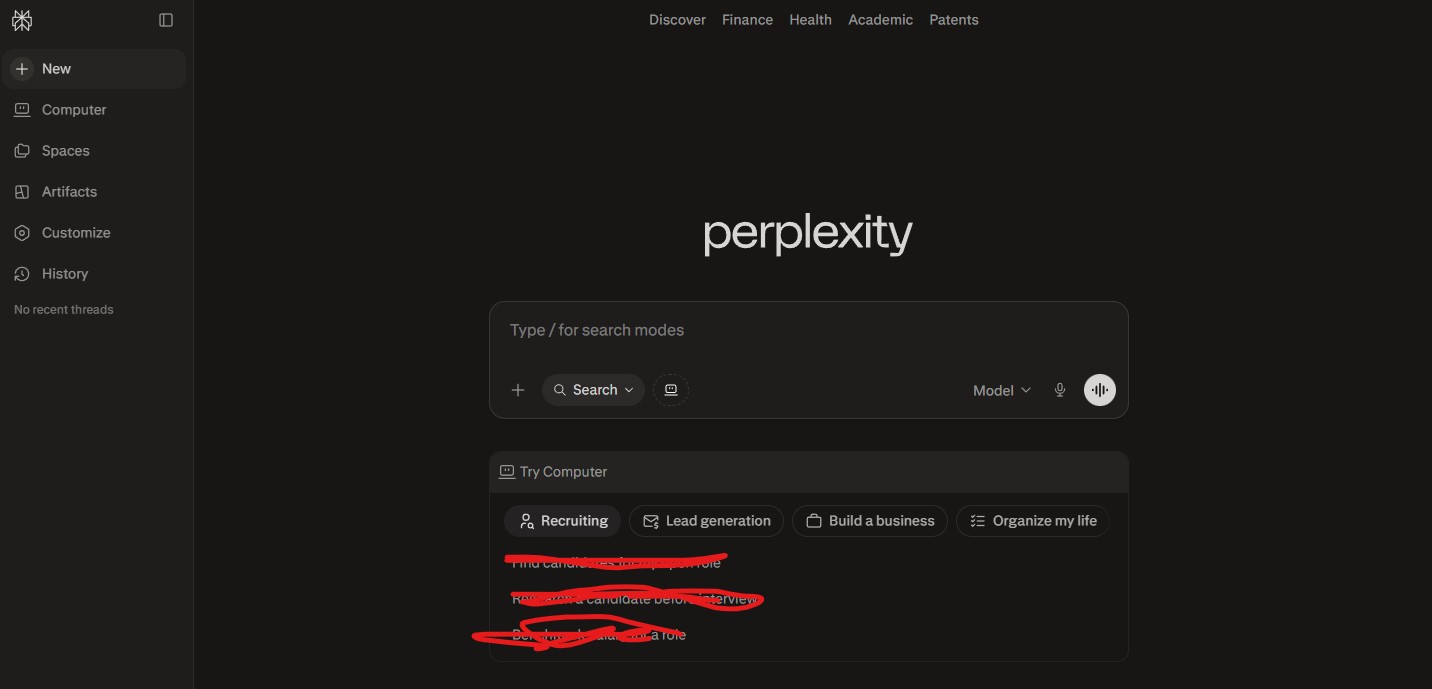
Perplexity – Speed, real-time information, and sources
Rather than depending solely on pre-fed training data, Perplexity AI combines huge language models with a real-time web retrieval system to provide up-to-date and source-backed replies, functioning more like an intelligent search engine than a standard chatbot. In order to provide up-to-date and source-backed responses, it integrates big language models with a real-time web retrieval system rather than solely depending on pre-fed training data.
Speed
Perplexity offers a distinct speed advantage because it was designed for quick responses rather than dialogue. It retrieves and synthesizes information in a single response, eliminating the need for numerous prompts and follow-ups.
Real-time information
As previously said, Perplexity processes data by continuously retrieving it from the internet, so the information you receive is current and in real time. This covers the most recent news, changing opinions throughout the world, changes in the market, new laws, etc.
For two weeks I used Perplexity AI of Google to find things and do research. Some days it was really great. I felt like I had a superpower.. Other days Perplexity AI gave me answers that were completely wrong and it was really sure, about them. I want to tell you what I really think about using Perplexity AI.
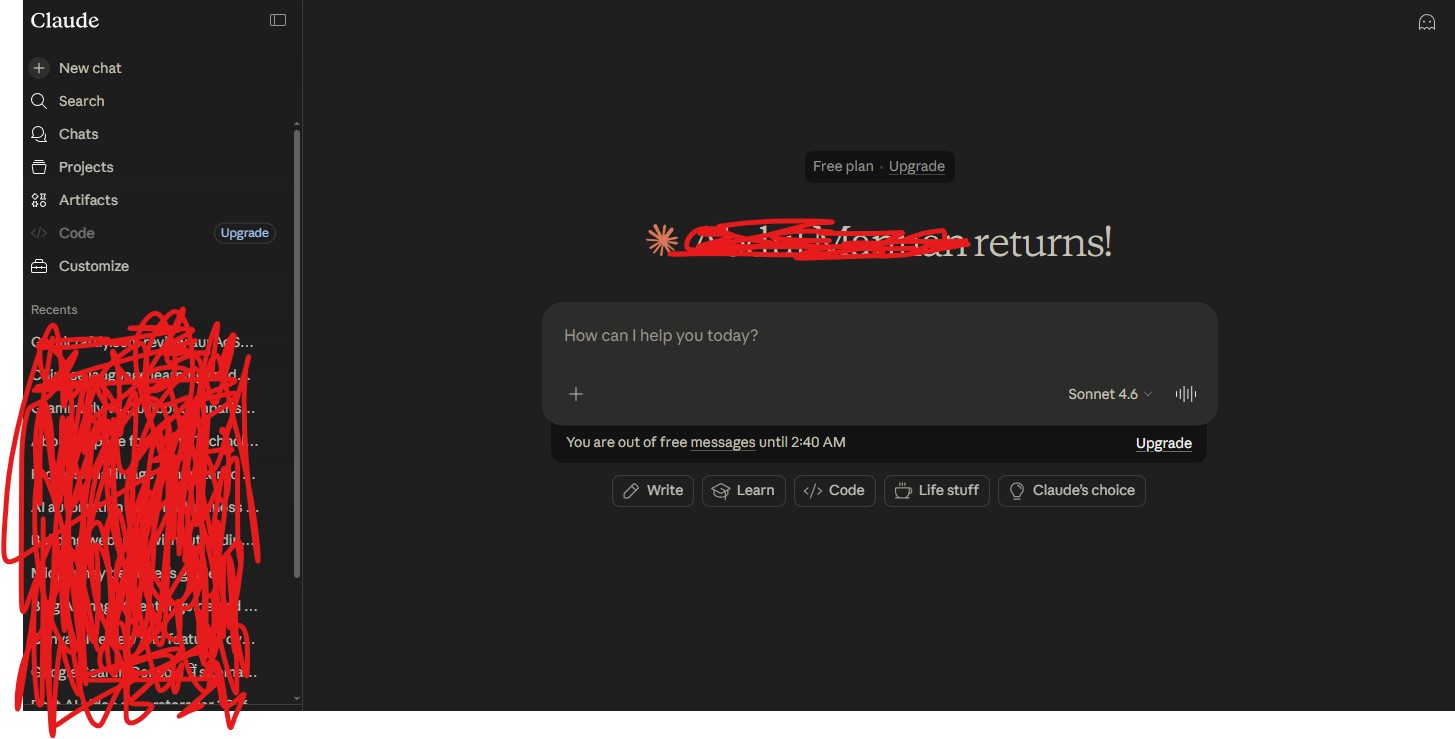
Claude- Depth, reasoning, and structured thinking
Unlike Perplexity AI, Anthropic’s Claude is more of a thinking and building partner that helps with the ideation and execution layer of workflows. Its architecture prioritizes deep-thinking reasoning, making it ideal when you need to think through problems, work with a lot of context, and create structured, high-quality products and resources. Rather, deep-thinking reasoning is given priority in its construction.
Claude is ideal for problem-solving, working with a lot of context, and producing well-organized, superior products and materials. Claude helps with the ideation and execution layer of processes, whereas Perplexity AI is more of a thinking and building companion.
I used Claude AI every day for two weeks. I tried it out for writing blog posts summarizing research and getting answers to questions. It really impressed me. The responses seemed real and like they were put together with care. Claude AI gave answers than I thought it would. I was surprised by how natural the responses felt. The responses from Claude AI felt thoughtful.
Depth
For projects involving huge data inputs, Claude is an exceptional AI tool. It can handle inputs totaling hundreds of thousands of tokens. For developers, consultants, market researchers, and even students, this makes it a very useful AI tool. Claude concentrates on creating a well-thought-out structure and building upon it rather than gathering disparate pieces of knowledge.
Reasoning
Claude’s true strength is its capacity to methodically analyze problem descriptions. It generates better logically consistent results while debugging code, deconstructing complicated ideas, or analyzing trade-offs.
What is the key difference between Perplexity VS Claude?
Perplexity AI and Claude AI differ mostly in how they process, synthesize, and generate information rather than in their features. To put it simply, Perplexity is a knowledge retrieval-first system, whereas Claude is a reasoning-first system.
To put it simply, Claude is a reasoning-first system, whereas Perplexity is a knowledge retrieval-first system.
Retrieval vs reasoning
Perplexity is designed to gather information from the internet in real time and condense it into an understandable response. It prioritizes information freshness and source validation, treating each input as a search problem.
However, Anthropic has designed Claude to prioritize context, use its own training data, and solve problems. By default, it does not rely on information retrieval from the web and instead concentrates on deciphering, comprehending, and elaborating on the input provided.
Answers vs thinking
Perplexity maximizes responses that are brief, succinct, and answer-like. Its objective is to provide you with trustworthy information as soon as possible, along with connections to the original sources.
Claude functions more like an assistant for collaborative thinking. It is more appropriate for writing, scripting, and multi-step problem solving since it generates lengthy, structured responses.
Stateless search vs contextual memory
Perplexity usually handles each input separately, concentrating on using outside data sources to provide the optimum response at that particular time.
Conversely, Claude is more adept at preserving context during lengthy discussions and substantial inputs, allowing for more complex workflows like document analysis, iterative coding, content production, or strategy development.
Breadth vs depth
Breadth benefits much from perplexity. It swiftly provides you with a variety of viewpoints on a subject by scanning through several sources.
Claude has a lot of depth. It gathers data from you and delves further. gradually improving, organizing, and thinking through it.
The Undisputed King of Context and Creativity
The enormous 300k token context window is Claude’s superpower. That fundamentally alters how you can use an AI; it’s not just a large number on a specification sheet. You can ask it to summarize complex legal arguments or evaluate character development in a manuscript the size of The Great Gatsby without losing the plot.
This ability to hold so much information in its short-term memory makes it a go-to for:
Content Creators: creating marketing content, coming up with ideas for whole blog series, or changing the format of lengthy posts.
Writers and Authors: Getting detailed comments on chapters, developing story ideas, and overcoming writer’s block.
Developers: Walking through a complex codebase or getting detailed, step-by-step debugging help.
Market Research on the Fly
Let’s start with a classic scenario: I need a rapid, up-to-date market summary. “What are the latest trends in the direct-to-consumer (DTC) coffee market for 2026?” was the same question I posed to them both.
Perplexity’s Performance: Perplexity fulfilled its intended purpose. It sprung into action, scanning the live web and compiling a concise synopsis of current trends, including new cold brew technology, subscription structures, and a significant push for sustainable sourcing. The finest aspect? It acknowledged its sources, providing me with five distinct links from recent news stories and industry studies that I could utilize to confirm everything. The response was prompt, accurate, and helpful right away.
Claude’s Performance: Conversely, Claude was confined to its training set. It provided a respectable, well-written summary of common DTC concepts, such as brand narrative and customisation. However, everything was generic. Because it cannot view the internet, it was unable to provide particular statistics from 2026 or current changes in the market. The reaction didn’t feel like a new insight, but rather a chapter from a marketing textbook.
Perplexity vs Claude: What’s different and what’s not?
I wanted to identify the differences and similarities between these two AI chatbots after spending a lot of time with them. Here are my thoughts on the key distinctions and parallels between Perplexity vs Claude.
The New SEO Frontier Beyond Traditional Search
Even with a spotless rank tracker, an SEO manager may find it difficult to respond to the most crucial query during a reporting call: why did helped conversions feel lower this month? Users are assumed to search, compare blue links, and click through under the previous model. That still occurs. However, AI answer engines that condense research into a single response now account for an increasing portion of discoveries.
Understanding the Core AI Models and Capabilities
Treating the brand names as the product is the largest error in chat gpt vs. perplexity vs claude comparisons. For SEO use cases, what counts is the model behavior underneath: how each system manages reasoning, current information, document size, and source transparency. The model behavior underneath—how each system manages logic, current information, document size, and source transparency—is what important for SEO use cases.
Comparing benchmarks from 2025 and 2026 reveals a difference in strengths. According to Emergent’s model comparison, Perplexity Sonar excels in real-time research with source citations, Claude Sonnet 4.6 leads in complicated reasoning, and ChatGPT GPT-5.4 dominates coding operations with 84.2% on MMMU. For AEO, this means that different aspects of the workflow are best served by each tool.
James Eco is an AI tools researcher and content
creator with 3+ years of experience testing and
reviewing AI tools for creators and businesses.
At Get AI Craftly, he provides honest, hands-on
reviews to help readers choose the best AI tools.