Two of the biggest leaders in the AI sector today are Anthropic and OpenAI. Read on to learn why the Anthropic vs OpenAI debate isn’t a zero-sum game before you choose one.
Two of the biggest leaders in the generative AI space are Anthropic vs OpenAI, although they approach application, safety, and ethics differently. OpenAI is an AI research and deployment firm whose “mission is to ensure that artificial intelligence benefits all of humanity,” whereas Anthropic’s goal is to create “reliable, interpretable, and steerable AI systems” through AI safety and research.
Depending on how you use generative AI, you can decide whether to use OpenAI’s ChatGPT or Anthropic’s Claude. Learn more about the benefits, drawbacks, and factors to take into account when deciding between Anthropic vs OpenAI by continuing to read.
What is Anthropic?
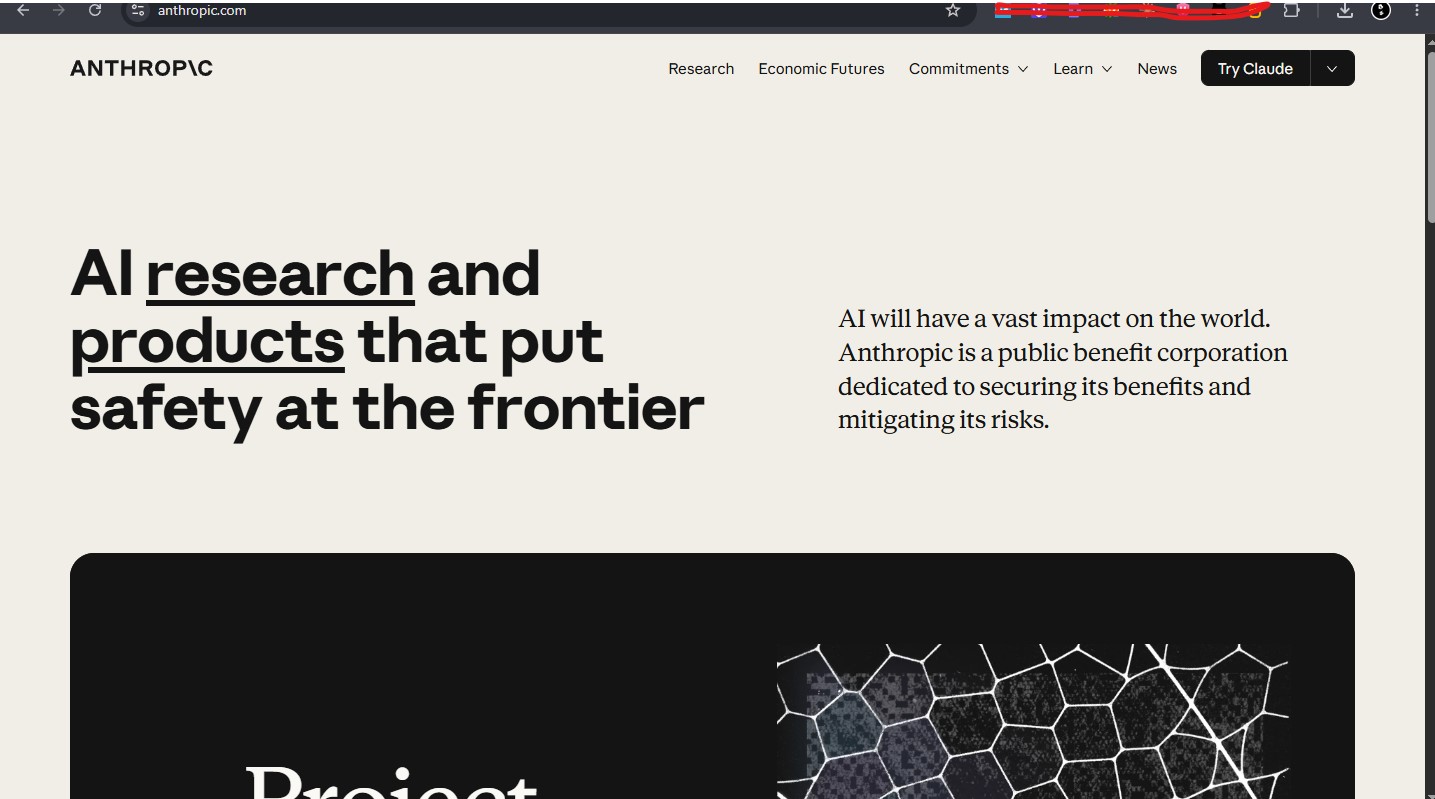
Anthropic is an AI public benefit organization with a focus on AI safety and research, founded in 2021 by Dario Amodei, Daniela Amodei, and other former OpenAI researchers.
Anthropic’s main goal is to make sure its huge language model Claude is also an ethical AI, even if it aims to develop conversational AI that is strong and able to handle complicated queries and jobs. In order to achieve this, Anthropic’s multidisciplinary team studies the workings of an AI’s mind in great detail. Anthropic aims to develop safe, dependable, and trustworthy AI by establishing itself as an industry leader in generative AI safety and research.
To ensure Claude remains an ethical AI, its team of researchers and engineers employ a method called constitutional AI.
This approach, which is based on human-generated ethics and standards, continuously improves AI models to produce more morally sound results. In actuality, the AI model continuously compares its results to its human-directed ethical standards.
What is Anthropic used for?
Claude 3.5, Anthropic’s flagship conversational AI, is utilized for tasks involving multilingual processing, complex reasoning, visual analysis, and code production. Claude can be accessed via the online interface, an Android or iOS app, or an application programming interface (API).
With its Artifacts feature, 3.5 Sonnet lets you create code snippets, interpret graphs, and create a new website in real time at twice the speed of its predecessor, Claude 3 Opus. These generated outputs appear as a pane beside your talk as Claude creates objects, like as code samples or website designs.
This new arrangement fosters a more collaborative atmosphere with AI. Because you can modify and add to Claude’s real-time outputs, Sonnet becomes an interactive workplace.
Let’s say you made the decision to start a modest coffee roastery and cafe. You can identify the ideal product combination for your freshly roasted coffee beans, analyze and forecast trends, and learn about your consumers’ preferences by uploading your sales and marketing data straight to Claude 3.5 Sonnet.
Advantages of Anthropic
Claude AI from Anthropic is designed with precision, security, and dependability in mind. Anthropic has much more control over how its model reacts by carrying out in-depth research into the huge language model’s reasoning and thought processes.
In actuality, you are less likely to come across unsuitable, immoral, or dishonest results. Although you should constantly verify the results of your AI, according to Claude, accuracy is dependable even in lengthy texts, and hallucinations—confident claims of factual errors as fact—are less frequent.
Lastly, Claude complies with a set of ethical AI standards since Anthropic teaches him using constitutional AI techniques. Claude’s results should theoretically be less skewed toward a certain political or social end of the spectrum.
Disadvantages of Anthropic
Although Claude 3.5 Sonnet is capable of interpreting images and deriving words and meaning from them, it is unable to produce them in the same way as ChatGPT does with its DALL·E3 image model. You will need to employ a different AI or make the photos and movies by hand if your project calls for AI image or video generation.
Additionally, Claude 3.5 Sonnet lacks real-time internet access by default. Although this produces a secure, distraction-free AI workplace, Claude 3.5 Sonnet cannot be used for in-the-moment study. Sonnet can still assist you with creating new websites, writing reports, and deciphering graphs, nevertheless.
What is OpenAI?
OpenAI is an AI research firm that was founded in 2015 by Sam Altman, Greg Brockman, Elon Musk, and others. Its main focus is on the creation, application, and security of artificial general intelligence (AGI).
Unlike Anthropic, OpenAI provides a range of generative AI products, such as Codex, Whisper, DALL·E, and ChatGPT. While OpenAI’s API allows developers to interact and explore use cases across all of OpenAI’s conversational AI products, CLIP describes visuals.
What is OpenAI used for?
You may do research, produce content, make graphics, translate languages, develop chatbots, analyze data, automate repetitive tasks, and more by utilizing capabilities in OpenAI products.
You can do quick research, summarize documents, understand calculus, and extract data from charts and diagrams with ChatGPT. You may easily access these AI tools as needed because OpenAI has incorporated DALL·E, Codex, CLIP, and Whisper within the ChatGPT online interface and mobile app.
Additionally, DALL·E can provide unique artwork for your cafe. You can customize the custom art to match the style of your café by entering a thorough prompt that includes the aesthetic, camera angles, and basic description of the image you wish to create.
Codex is useful if you need to create an application or a webpage from scratch using HTML and CSS. Codex will accept your input and produce lines of code when you enter a thorough prompt.
Lastly, you have real-time web access with OpenAI’s most recent model, GPT-4, which means that each factual statement includes a source link. With the option to go deeper into the source links, this enables you to conduct quick research on a subject.
Advantages of OpenAI
You’ll get access to tools that can simplify and expedite learning, writing, working, and producing thanks to OpenAI’s wide selection of conversational AI solutions. You may readily access the entire suite of OpenAI’s products via the API, its online interface, or the iOS and Android mobile apps because the company’s goal is to make its conversational AIs available to a wide audience.
Disadvantages of OpenAI
Reinforcement learning or reinforcement learning from human feedback (RLHF) is used to train OpenAI’s conversational AIs. This guarantees that the AI does tasks that humans require or desire, but it may skew the AI’s results.
RLHF depends on human annotators and evaluators to be diligent, truthful, and reliable. Additionally, it makes the assumption that the AI model is completely compliant with instructions, has no hidden agendas, and won’t manipulate the system to maximize reward.
But as of January 2024, OpenAI had provided funding to a number of groups working on democratic AI governance. According to OpenAI’s official blog, “As AI gets more advanced and widely used, it is essential to involve the public in deciding how AI should behave in order to better align our models to the values of humanity”.
Anthropic vs OpenAI: Other considerations
Your use case will determine whether you should utilize OpenAI’s set of generative AI tools or Anthropic’s Claude. In general, Claude excels at:
- Content ideation
- Brainstorming
- Interpreting graphs
- Extracting data from uploaded images
- Drafting preliminary pieces of text, like reports or essays
OpenAI’s conversational AIs are good for:
- Brainstorming
- Content ideation
- Cursory research on topics of interest
- Image generation and creation
- Real-time, voice-based conversations via Whisper
- Image descriptions and data extraction via CLIP
- Multilingual coding via Codex
It’s not an either-or choice in the end. As you learn more about these conversational AIs, you may come to the conclusion that one is better at writing essays and the other is better for gathering information from and summarizing profit-and-loss accounts. Try out the conversational AI tools from Anthropic vs OpenAI to see which ones work best for you.
Getting started with AI on Coursera
Anthropic vs OpenAI have different perspectives on the future of AI. Anthropic places a heavy emphasis on useful generative conversational AI and ethical AI. On the other hand, OpenAI adopts a more democratic stance toward ethics and AI ideals while providing a widely available suite of generative AI products.
You can locate a Vanderbilt University Specialization on Coursera if you’re interested in integrating AI into your project management responsibilities. With the ChatGPT for Project Management Specialization, you can get the ability to:
- Incorporate ChatGPT into your project management tasks
- Use ChatGPT and other AIs to simplify project planning
- Conduct better meetings
But if you want a more comprehensive understanding of generative AI, IBM’s Generative AI Fundamentals Specialization on Coursera can provide you with the fundamental AI ideas you’ll need to:
- Understand the difference between generative AI and other types of AI
- Learn how to apply generative AI in daily life
- Learn about and apply different prompt engineering techniques to get the most from AI
- Gain a thorough grasp of different AI platforms
- Gain awareness of all the ethical issues around generative AI
- Gain the skills to apply AI to all facets of your career
James Eco is an AI tools researcher and content
creator with 3+ years of experience testing and
reviewing AI tools for creators and businesses.
At Get AI Craftly, he provides honest, hands-on
reviews to help readers choose the best AI tools.