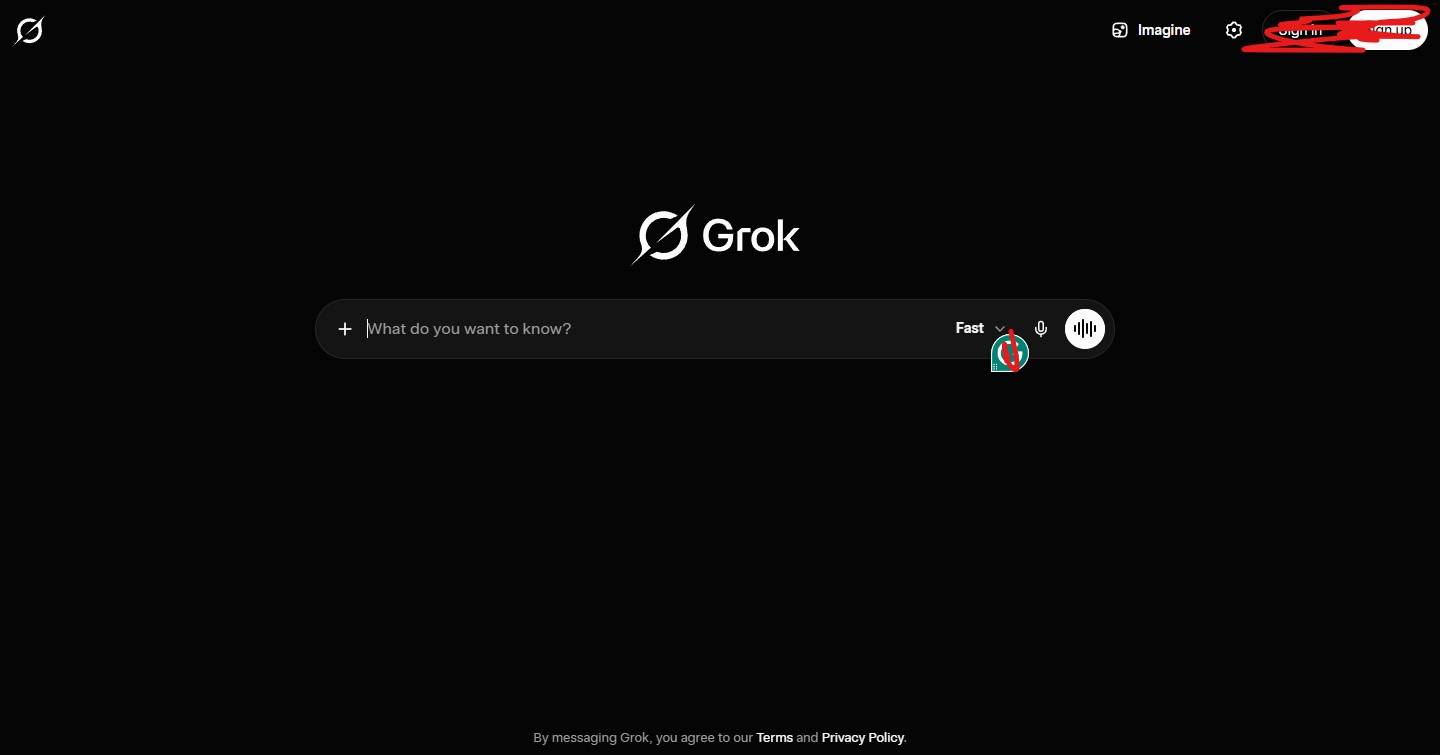
I tested Grok AI extensively over the last 13 months, from asking it real-time questions about breaking news and market trends to using it for creative writing, coding help, humor-driven brainstorming, and deep factual research. I used it across both the free and paid tiers, watched it evolve through multiple major version releases, and compared it directly against ChatGPT, Claude, and Perplexity on identical tasks. This Grok AI Review is not built on a press release or a one-hour trial. It comes from 13 months of genuine, daily-adjacent usage that gave me a clear picture of exactly where Grok delivers and where it still falls short.
When xAI first launched Grok in late 2023, the initial reaction was split — some people were genuinely excited about an AI with a personality, real-time X (formerly Twitter) access, and fewer content restrictions than competitors. Others dismissed it as a novelty. After 13 months of personal testing, I can tell you the reality is more nuanced than either reaction. Grok has matured meaningfully, and in specific areas it now offers genuine value that its competitors cannot match. But it also has real limitations that are worth knowing before you commit your workflow to it.
What Is Grok AI?
Grok AI is a large language model developed by xAI, the AI research company founded by Elon Musk in 2023. It was built as a direct competitor to ChatGPT and other leading AI assistants, with two distinctive features baked into its core design from the start: a sharp, often humorous personality inspired by The Hitchhiker’s Guide to the Galaxy, and real-time access to data from X (formerly Twitter).
As of 2025, Grok has gone through several
Grok AI Key Features
Before diving deeper into this Grok AI Review, here is a summary of what the platform currently offers:
- Real-time X (Twitter) data access — Live tweets, trending topics, breaking news
- Real-time web search — Current information from the broader web (Grok-2 and above)
- Grok-3 model — xAI’s most powerful model with enhanced reasoning and coding ability
- DeepSearch mode — An extended research mode that searches more broadly and reasons longer before responding
- Image understanding — Upload images and ask questions about them
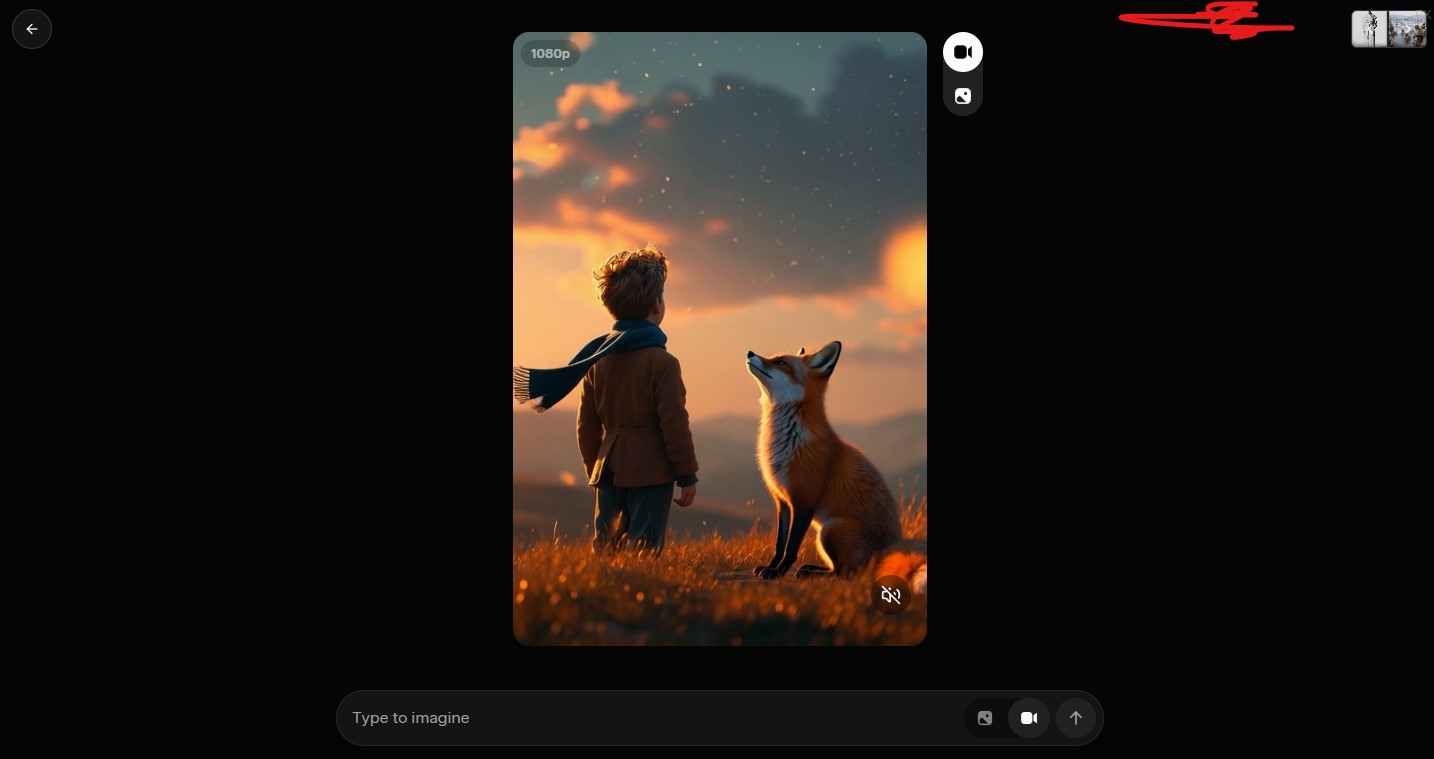
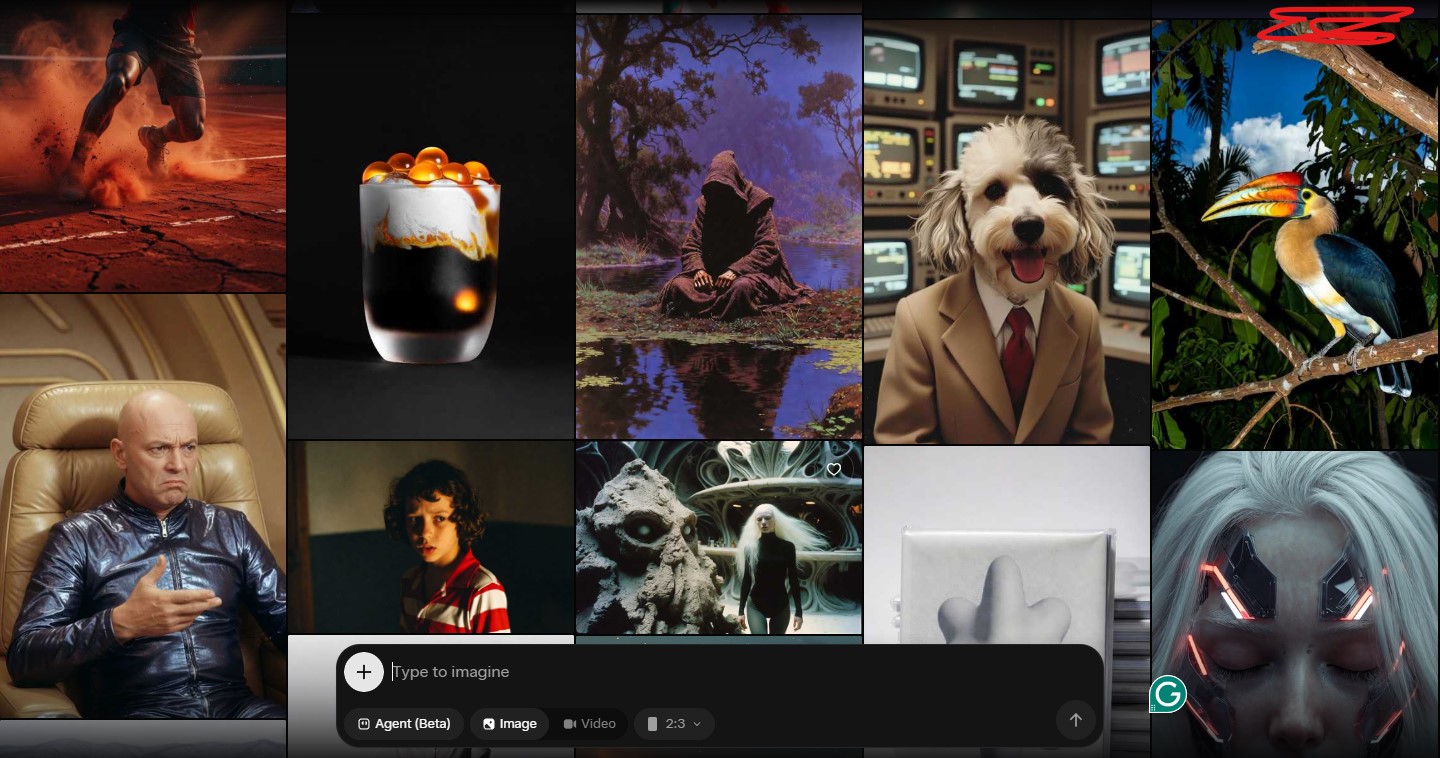
- Image generation — Generate images using Aurora, xAI’s image generation model
- Voice mode — Talk to Grok using voice input
- Code generation and debugging — Strong technical assistance capability
- “Fun mode” personality — Witty, sarcastic, and less filtered than competitors
- Long context window — Handles lengthy documents and conversations
significant model iterations — Grok-1, Grok-1.5, Grok-2, and most recently Grok-3, which xAI claims is its most capable model yet and was released in early 2025. Each version brought meaningful improvements in reasoning ability, context length, and output quality.
Grok is accessible through X Premium and X Premium+ subscriptions, as well as through the standalone Grok.com web interface. xAI has also made Grok-1 open-source, which opened the model to third-party developers and researchers.
Grok AI Review: What I Actually Tested Over 13 Months
Real-Time X Data — Grok’s Defining Feature
No other major AI chatbot has live, native access to X’s data feed the way Grok does. This is not just a web search, Grok can pull actual tweets, trending hashtags, public discussions, and breaking news from X in real time, directly within a conversation.
Over 13 months of testing, I used this feature extensively for:
- Tracking breaking news as it happened, with real tweet references
- Monitoring public sentiment around specific topics, brands, or events
- Researching trending discussions in niche communities
- Fact-checking claims circulating on social media
The results were genuinely impressive for this specific use case. When a major tech announcement broke, I asked Grok what people were saying about it on X within minutes of the news dropping. It synthesized public reactions, pulled key discussion threads, and gave me a picture of the conversation that no other AI tool — not ChatGPT, not Perplexity, not Claude — could have provided with the same immediacy and social context.
If you work in journalism, social media management, PR, or any field where public sentiment and real-time social data matter, this feature alone gives Grok a meaningful edge.
My Honest Assessment After 13 Months: The X data integration is real, useful, and genuinely differentiated. It is not just a gimmick.
Grok-3 and Reasoning Capability
Grok-3, released in early 2025, was a significant leap from what I had been testing in the earlier months. xAI made aggressive claims about its benchmark performance, and while benchmark scores do not always translate to real-world usefulness, my personal testing of Grok-3 confirmed meaningful improvements.
I tested Grok-3 across several reasoning-heavy tasks:
- Multi-step math problems — Grok-3 handled these accurately and showed its working clearly
- Logical deduction puzzles — Performance was strong, comparable to GPT-4o on the tasks I tried
- Complex research synthesis — Grok-3 pulled together information from multiple sources and presented coherent, organized analysis
- Nuanced argument analysis — It identified logical flaws in arguments more reliably than earlier Grok versions
The DeepSearch mode — which gives Grok more time to search, reason, and reflect before answering — produced noticeably more thorough responses on research-heavy queries. I used it for background research on industry topics and competitive analysis, and the depth of output was competitive with Perplexity Pro for those specific tasks.
Writing Quality
This is an area where Grok has improved but where I found it still slightly behind the best competitors after 13 months of testing.
For short-form content — tweets, captions, punchy headlines, product descriptions, witty social copy — Grok is genuinely excellent. Its personality comes through in writing tasks in a way that makes casual, voice-driven content feel more natural than the slightly corporate tone that can creep into ChatGPT outputs.
For long-form content — detailed articles, comprehensive reports, nuanced essays — Grok’s output quality is good but not consistently at the level of ChatGPT or Claude. In my testing, long-form Grok responses occasionally lost structural coherence partway through, required more editing passes, and sometimes drifted from the specific angle I had requested.
I ran the same long-form writing prompt through Grok-3, ChatGPT (GPT-4o), and Claude across five separate tests during my 13 months of usage. Claude produced the most polished prose. ChatGPT was close behind. Grok produced usable but slightly rougher output that benefited from more editing. For short, punchy, personality-driven content, however, Grok was often my favorite.
Coding and Technical Assistance
Grok’s coding capability has improved substantially with each model version, and Grok-3 is a genuinely strong coding assistant.
I used it for Python scripting, debugging JavaScript errors, explaining regex patterns, writing SQL queries, and reviewing code for inefficiencies. On straightforward tasks, Grok-3 performed at a level comparable to ChatGPT. For more complex debugging — tracing errors across multiple files or reasoning about architectural issues — ChatGPT and Claude still felt slightly more methodical in their approach.
One area where Grok’s real-time web access helps with coding specifically: it can look up current library documentation, check the latest version requirements, and find recent Stack Overflow-style discussions about specific errors. This is a practical advantage over Claude’s static training data when working with rapidly evolving frameworks.
Personality and the “Fun Mode” Experience
This is the feature most associated with Grok in early reviews, and it deserves an honest assessment after 13 months of real usage.
Grok’s personality is real. It is not a thin layer of casual language on top of a standard AI response — it genuinely has a different register than ChatGPT or Claude. It is willing to be direct, sarcastic when appropriate, and funny in a way that does not feel forced. Over 13 months, I found this genuinely useful for creative brainstorming, ideation sessions, and tasks where an informal, energetic tone helped break through creative blocks.
It is also worth noting that Grok is less restrictive than ChatGPT or Claude in terms of the topics it will engage with. It handles edgier hypothetical questions, dark humor, and controversial topics with more willingness than its competitors. Whether this is a feature or a drawback depends entirely on your use case and personal preference.
For professional research and formal outputs, the personality occasionally felt like a distraction. For creative work and casual use, it was often the best part of the experience.
Grok AI Pricing
| Plan | Price | Access | Key Features |
| X Free | $0 | Limited Grok access | Basic queries, limited daily usage |
| X Premium | $8/month | Full Grok-2 access | Real-time X data, web search, image understanding |
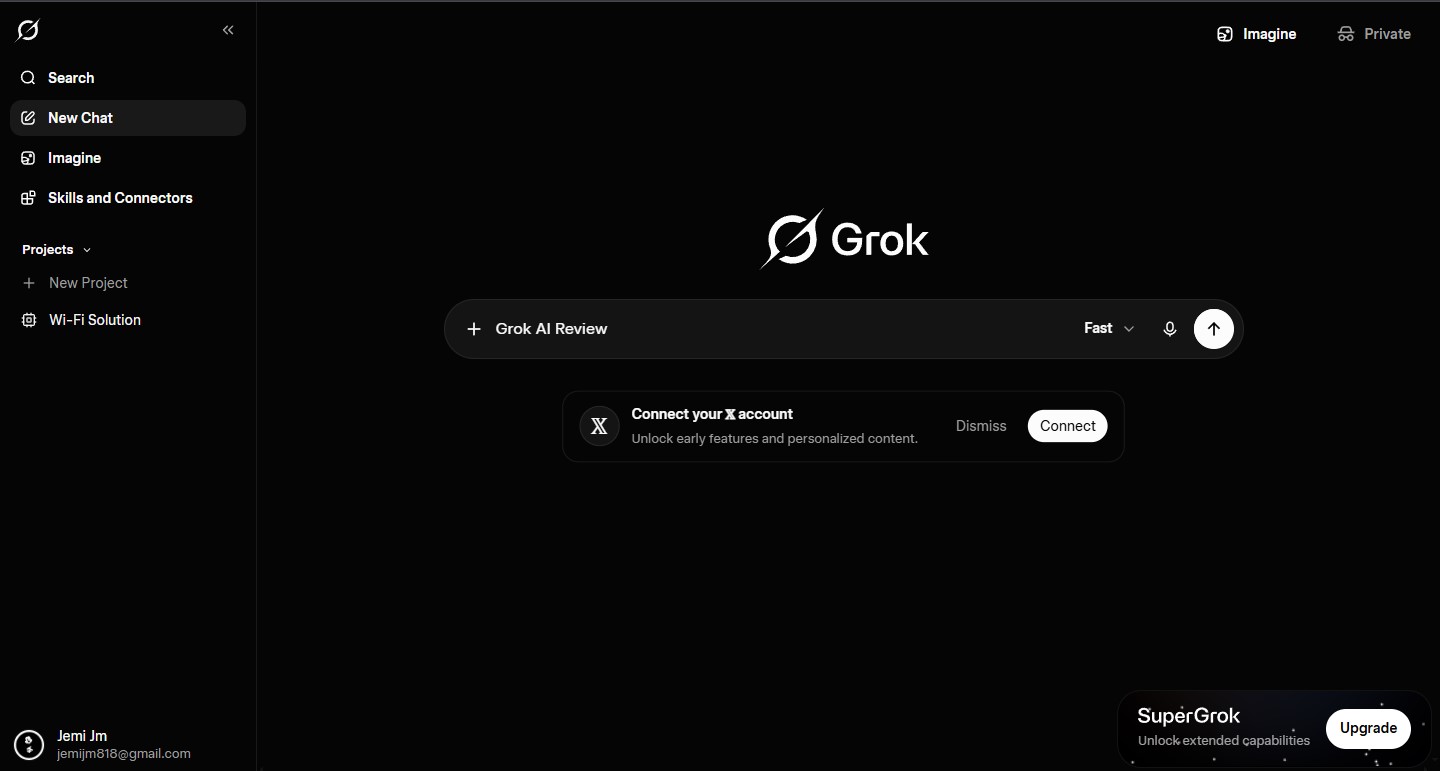
| X Premium+ | $16/month | Full Grok-3 access | DeepSearch, image generation, higher limits |
| SuperGrok | $30/month | Maximum access | Highest limits, priority access, all features |
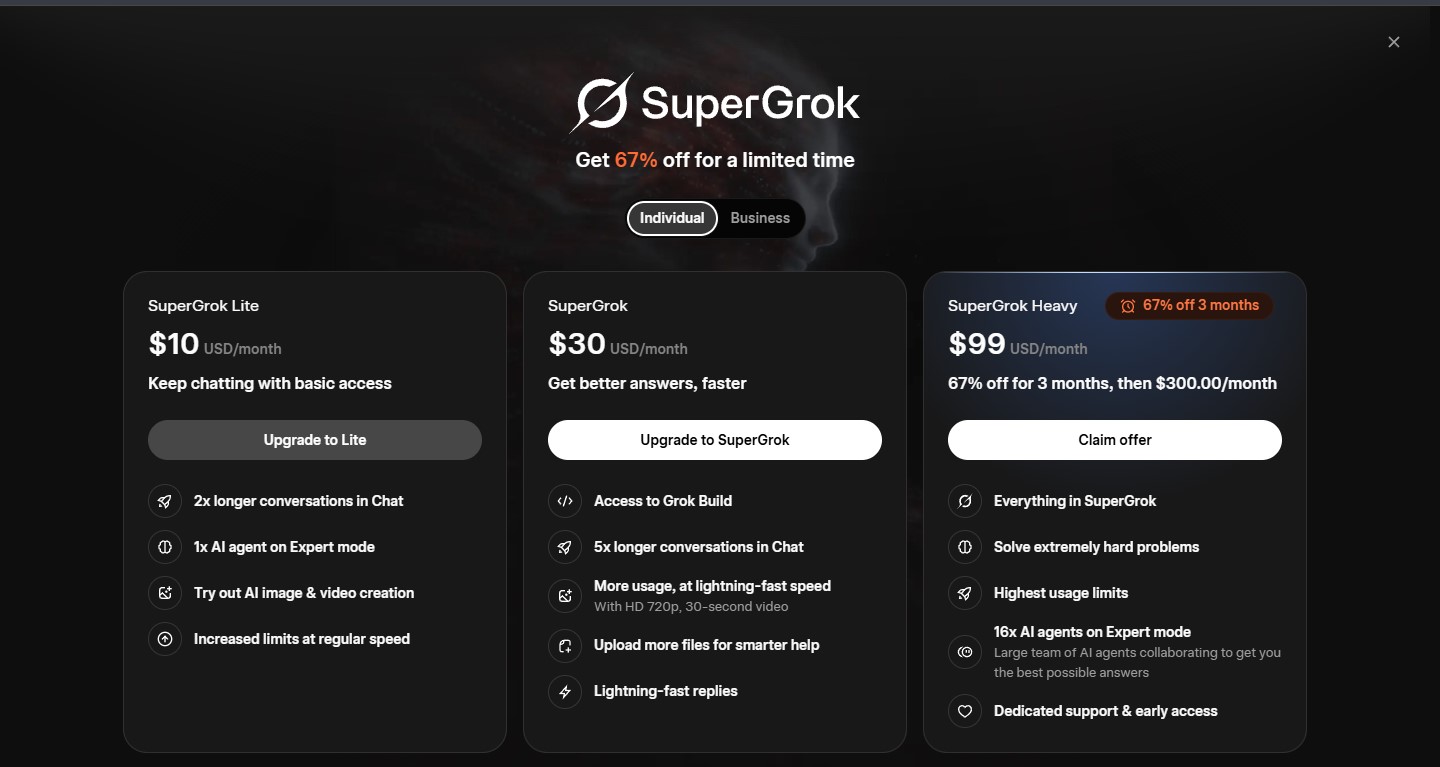
Note: Pricing is as of 2025 and is subject to change. Always verify current pricing at grok.com or x.com before subscribing.
Grok AI Pros and Cons
Pros
1. Unmatched Real-Time X (Twitter) Data Access
2. Real-Time Web Search Built In
3. Grok-3 Is a Legitimately Capable Model
4. Strong Short-Form and Creative Writing
5. Less Restrictive Than Competitors
6. DeepSearch Mode for Thorough Research
7. Image Generation via Aurora
Cons
1. Tied to the X Ecosystem
2. Long-Form Writing Quality Lags Behind Claude and ChatGPT
3. Smaller Community and Third-Party Resource Library
4. Personality Can Work Against Formal Use Cases
5. Platform Instability History
6. Pricing Structure Less Transparent Than Competitors
Grok AI Alternatives Worth Considering
If Grok does not fully match your needs based on this review, here are the strongest alternatives:
1. ChatGPT (OpenAI)
Best for: General-purpose AI assistance, long-form writing, coding, image generation, versatility
ChatGPT remains the gold standard for general-purpose AI assistance. Its writing quality, conversational depth, and ecosystem of custom GPTs make it the most versatile free and paid AI tool available. The free plan is genuinely capable; Plus at $20/month unlocks the full GPT-4o model and DALL-E 3 image generation.
2. Claude (Anthropic)
Best for: Long-form writing quality, document analysis, nuanced reasoning, thoughtful responses
Claude is my personal top choice for long-form writing and deep document analysis. Its output is the most consistently polished of any AI I tested, and its large context window makes it exceptional for working with lengthy research material. Free plan available; Pro at $20/month.
3. Perplexity AI
Best for: Real-time research with cited sources, fact-checking, sourced answers
If real-time information with verifiable citations is your priority, Perplexity is the most purpose-built tool for that job. Every answer comes with clickable source links. Free plan available; Pro at $20/month.
4. Microsoft Copilot
Best for: Free real-time web access, free image generation, Microsoft 365 integration
Microsoft Copilot offers GPT-4-powered responses with Bing Search integration and free DALL-E 3 image generation — all at no cost. A strong option for users who need web-connected AI without a subscription.
5. Gemini (Google)
Best for: Google Workspace users, real-time information, YouTube and Google integration
Google Gemini integrates seamlessly with Gmail, Google Docs, YouTube, and Search. Its real-time information access and Google ecosystem integration make it the best choice for users embedded in Google’s tools.
Quick Comparison:
| Tool | Real-Time Web | X/Social Data | Writing Quality | Best Use Case | Price |
| Grok | ✓ Yes | ✓ Unique | Good | Social/news/creative | $8–$30/mo |
| ChatGPT | Partial/Yes | ✗ No | Excellent | General purpose | Free/$20 mo |
| Claude | ✗ No | ✗ No | Excellent | Writing/documents | Free/$20 mo |
| Perplexity | ✓ Yes | ✗ No | Moderate | Research/citations | Free/$20 mo |
| Copilot | ✓ Yes | ✗ No | Good | Free web access | Free/$20 mo |
| Gemini | ✓ Yes | ✗ No | Good | Google ecosystem | Free/$20 mo |
Frequently Asked Questions: Grok AI Review
Q1: Is Grok AI free to use?
Grok offers limited free access through X’s platform, but meaningful, full-featured access requires an X Premium ($8/month) or X Premium+ ($16/month) subscription. A standalone Grok.com interface is available, with some free-tier access, but the most capable features — including Grok-3, DeepSearch, and image generation — are behind paid plans. Always check current pricing at grok.com as these tiers are updated periodically.
Q2: How does Grok compare to ChatGPT?
After 13 months of testing both, my honest assessment is that ChatGPT is more versatile and produces better long-form written content, while Grok has a unique advantage in real-time X data access, a more distinctive personality, and fewer content restrictions. For general-purpose use, ChatGPT is the stronger choice. For social data monitoring, news tracking, and personality-driven creative work, Grok offers something ChatGPT cannot.
Q3: Can Grok access real-time information?
Yes — and this is one of Grok’s genuine strengths. It has real-time access to both X’s social data feed and the broader web via search. This means it can discuss current events, recent news, trending topics, and live social conversations in a way that models without web access (like Claude on its free plan) cannot.
Q4: Is Grok AI safe and private to use?
Grok’s data handling is governed by X’s privacy policy, which is worth reviewing before using the tool for sensitive professional work. As with all major AI platforms, avoid sharing confidential personal information, client data, passwords, or proprietary business details in any AI chatbot conversation. For enterprise-level privacy requirements, review xAI’s enterprise data terms carefully.
Q5: What is Grok’s DeepSearch feature?
DeepSearch is Grok’s extended research mode, available on higher-tier plans. When activated, Grok searches more broadly across the web, takes more time to reason through the question, and produces longer, more thoroughly researched responses than standard mode. In my testing over 13 months, DeepSearch produced meaningfully better output for complex research tasks and topic deep-dives compared to standard Grok queries.
Q6: Is Grok better than Claude for writing?
In my 13 months of direct comparison, Claude produces more consistently polished long-form writing than Grok. For formal articles, detailed reports, and content requiring careful structure and tone, Claude is the stronger tool. Grok has an edge for short-form, personality-driven content — social copy, punchy headlines, creative brainstorming — where its distinctive voice is an asset rather than a distraction.
Q7: Does Grok generate images?
Yes. Grok includes image generation through Aurora, xAI’s image generation model, available on Premium+ and SuperGrok plans. In my testing, Aurora produced solid results for concept visuals and creative imagery. It is not yet at the level of Midjourney for purely artistic output, but it is a capable and convenient option that does not require a separate subscription.
Q8: Can I use Grok without an X (Twitter) account?
Yes. The standalone Grok.com interface is accessible without an X account, and xAI has been expanding direct access to Grok outside the X platform. However, some features — particularly the real-time X social data feed — are inherently tied to X’s platform and require an X account to access fully.
Q9: How accurate is Grok AI?
Grok’s accuracy has improved substantially with each model iteration. Grok-3 performs well on factual questions, especially for current topics where its real-time web access gives it an information advantage over models with knowledge cutoffs. Like all large language models, it can still produce incorrect information, particularly on obscure or highly specialized topics. Critical information should always be independently verified regardless of which AI tool you use.
Q10: Who should use Grok AI?
Based on 13 months of testing, Grok is the best fit for: journalists and media professionals tracking real-time social conversations, social media managers monitoring brand sentiment on X, content creators who want a personality-driven AI writing partner, developers who want a capable coding assistant with web-connected knowledge, and users who feel limited by the content restrictions of ChatGPT or Claude. It is less ideal for users who primarily need polished long-form writing, deep document analysis, or citation-backed research.
Final Verdict: Is Grok AI Worth Using in 2025?
After 13 months of testing Grok across real projects and comparing it directly against the best alternatives, my honest verdict is this: Grok is a genuinely capable AI tool with specific strengths that no competitor currently matches — but it is not the right primary AI assistant for everyone.
If you live on X, care about real-time social data, want an AI with actual personality, and need current information as a default rather than a premium upgrade, Grok belongs in your toolkit. Grok-3 is a real step forward, DeepSearch is a legitimately useful research feature, and the X integration remains uniquely valuable in a way that other tools simply cannot replicate.
If your primary needs are long-form writing quality, deep document analysis, or citation-backed research, other tools — Claude, ChatGPT, and Perplexity respectively — still serve those specific use cases better.
The smartest approach, based on my 13 months of daily testing across multiple AI platforms, is to think of Grok as a specialized tool rather than a replacement for everything else. Pair it with Claude or ChatGPT for writing, and with Perplexity for sourced research, and you have a toolkit that covers virtually every AI-assisted workflow you could need.
Grok is no longer the scrappy newcomer it was when it launched. It has grown into a serious, competitive AI platform that earns genuine consideration. Whether it earns a place in your daily workflow depends entirely on how central real-time social data and personality-driven AI interaction are to the work you actually do.
James Eco is an AI tools researcher and content
creator with 3+ years of experience testing and
reviewing AI tools for creators and businesses.
At Get AI Craftly, he provides honest, hands-on
reviews to help readers choose the best AI tools.