Some of Canva’s most well-known capabilities are combined with AI flare in Magic Studio, the company’s new AI division. The Magic Studio has multiple sections where you can produce various kinds of entertainment. While some of these, like Magic Design and Magic Media, are now accessible to free accounts, others, like Magic Write and Magic Animate, are only accessible to Canva AI accounts through a barrier.
Similar to how I investigated Meta Spark Studio, I tackled Magic Studio in a different way than the programs I’ve discussed in my previous evaluations. This time, I began by experimenting with a few of the Magic Studio’s many areas. After that, I created an AI-based project using my favorite. I’ll go over everything here, beginning with my preliminary exams.
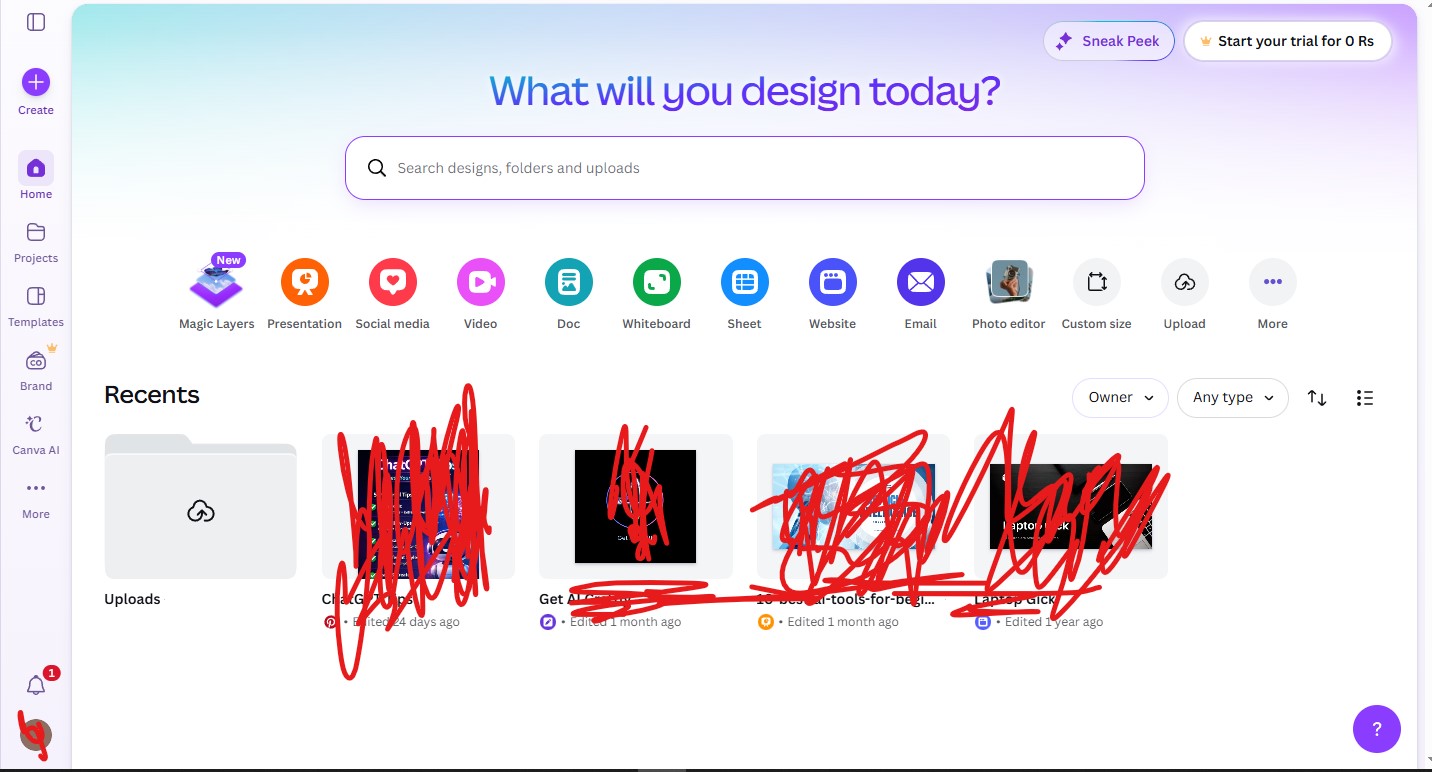
Testing the Free Magic Studio Tools
I should also make it clear before I begin that I have absolutely no experience with artificial intelligence. Think of this as a baby AI user’s (figurative) first introduction to this new world of technology. I made the decision to keep things straightforward in order to facilitate those initial stages for both myself and the AI tools in Magic Studio. I chose a theme (Christmas) for all of my challenges and made an effort to select wording that I thought the AI might understand. These are the outcomes:
As previously mentioned, I began by experimenting with a couple of Magic Studio’s many features. I started with Magic Design, which essentially lets you use text to create templates for flyers, invitations, social media posts, and other typical Canva items. Here are the outcomes of my use of the prompt, “A purple and gold invitation to a company Christmas party”:
The basics of Canva AI image generator, Magic Media
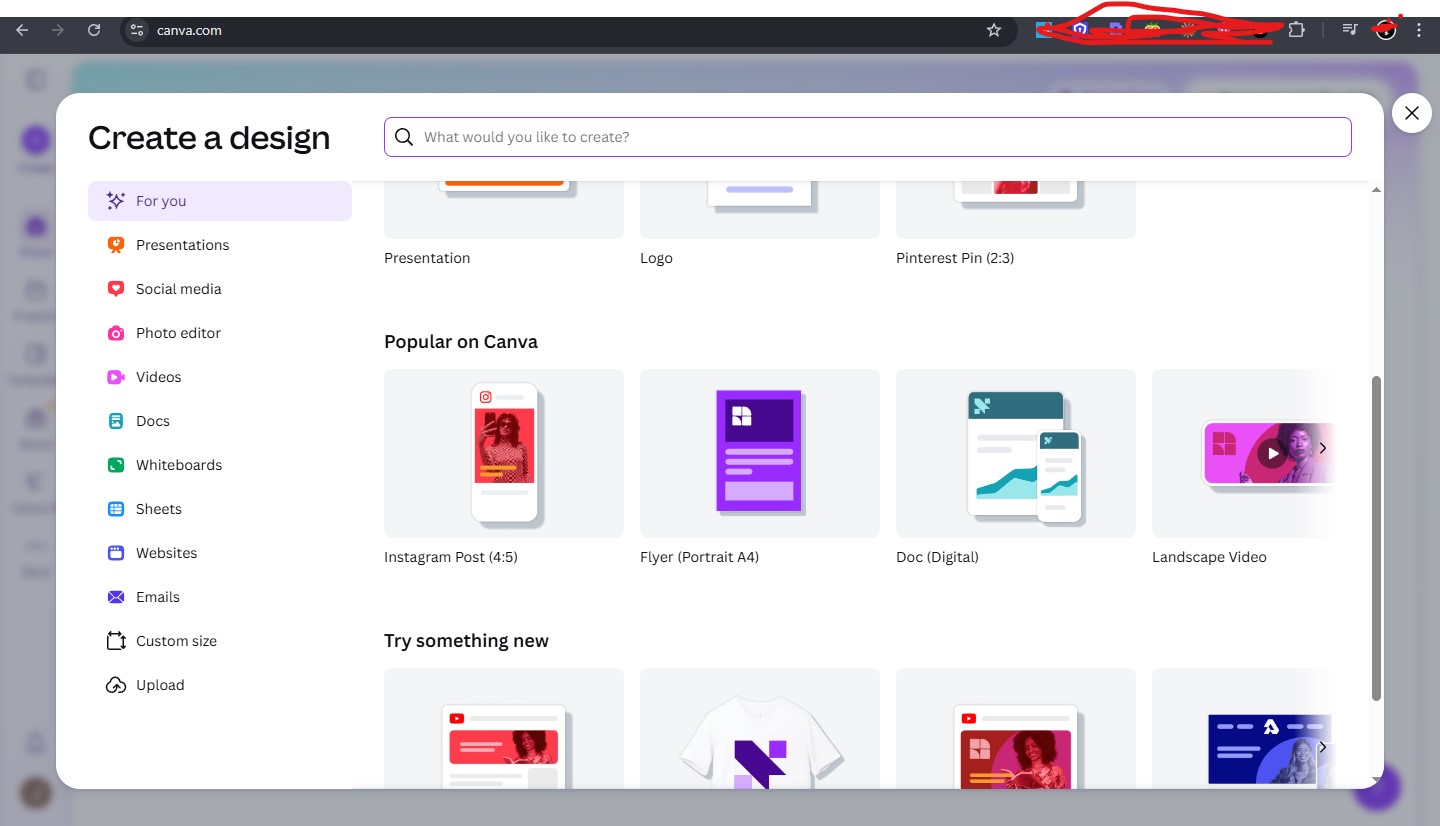
When you begin a new Canva project, you can easily access its AI picture generator via a variety of paths — the simplest is to select Magic Studio right when you log in, or if you’re in a project file, simply choose Elements, then Generate my own AI image. This will launch the Magic Media app in your side menu, where you will see the prompt box, an Inspire Me symbol, and a selection of preset styles to choose from. Use the option at the top of the page to create films and images. This option also displays the number of credits you currently have.
Magic Media’s free Canva plan includes 50 image credits and 5 video credits. And you’ll use these credits way too rapidly. During my testing, I discovered that numerous things qualified as credit. Every time you run a prompt, you spend a credit. I occasionally lost credit for inserting more than one image per batch, but other times I didn’t, for no apparent reason. Once you’ve used an image, it’s saved in your Uploads folder, where you can reuse it in as many projects as you like without losing credit.
How good are the images, and how well do they match prompts?
I experimented and created more than 80 images with Magic Media. I created prompts, used several of Canva’s preset themes, and played with the Canva AI video and graphics generating capability. Here’s how things went.
When you submit a prompt, Canva creates four square images. Unless you tell Canva what style to use, either through the presets or your prompts, it defaults to a more whimsical and cartoonish design. People and animals have exaggerated characteristics, which are more minimalistic than detailed. And there’s a good reason Canva doesn’t focus too much on photorealistic images: it’s not excellent at creating them.
When I tried to create images of people, things, and locations, at least two of them resembled illustrations rather than photographs. The more lifelike options ranged from strange to downright terrifying.
How engaging are the images?
Canva AI images were enjoyable, even if they were not perfect. Canva pushed toward whimsy and cartoon-like qualities, using bright colors and creatures with exaggerated features. Canva did not default to stock-photo-like pictures, however it might generate them if you specify it in your prompt.
Even the images that were a bit of a catastrophe (looking at you, photorealistic photographs) were enjoyable to laugh at and point out anomalies. Overall, Canva AI photos are really entertaining, if not entirely accurate or usable. Playing about with different prompts and photos was enjoyable, but I can imagine becoming annoyed if you want a specific image and couldn’t get it quite right.
How fast do images arrive?
Generative AI is not free, thus image-generation services must decide how much to invest in the pace of image creation.
Canva AI has a reasonable response time for picture creation; it takes between 10 and 30 seconds to generate a batch of images. And, if you’re impatient like me, the progress indicator that indicates how much longer it will take is a wonderful touch. Videos take longer, typically 2 to 3 minutes.
Personal Experience
I tested all Canva AI features for a week. These include Magic Write, Text, to Image and Background Remover. Some features really helped me save time on design work. I mean they saved me hours. Others did not work that well. I tried them out myself. Here is what I found out.
Where Canva Code Falls Short
Overall, I’d rate this initial release a 4 out of 10. Here’s why:
Basic Technology Stack
Canva Code generates simply plain HTML, CSS, and JavaScript. Most current websites now rely on frameworks such as React or Next.js for scalability. If you know how to code, you’ll get better results using models like Google Gemini 2.5 Pro, Claude Sonnet 3.7, or OpenAI’s ChatGPT o4-mini, all of which have free tiers.
No In-Editor Code Editing
Once Canva Code has generated your site, you will be unable to edit the source code straight from the AI panel. Any changes need you to rewrite prompts rather than simply changing text or styling in an editor.
Limited Design Imports
Importing into Canva Design sounds interesting, however you can’t currently change the text, fonts, graphics, or animations imported from the AI build. You’re stuck with what Canva AI Code provides until they add more tweaking options.
Target Audience
This tool looks to be geared at those with no coding skills. If you’ve ever experimented with HTML/CSS, you’ll probably find it constraining. However, for total newbies, drag-and-drop publishing can save a lot of time.
Final Thoughts
Canva AI Code is a fascinating first step toward democratizing website design with artificial intelligence. For non-developers who require a quick online presence, it provides an unrivaled run-through experience. However, if you’re a developer who values clean, maintainable code or requires modern frameworks, the constraints are too important to overlook.
Conclusion
I’m excited to learn more about AI through this course. I can see that it has applications in digital storytelling, but I’m still figuring out how to use it efficiently and ethically. If you want to gain a better idea of this new universe, I recommend using Canva’s Magic Studio. You may, of course, use it for genuine design tasks, but I believe it’s also a good tool for practicing writing prompts and editing AI-generated content.
James Eco is an AI tools researcher and content
creator with 3+ years of experience testing and
reviewing AI tools for creators and businesses.
At Get AI Craftly, he provides honest, hands-on
reviews to help readers choose the best AI tools.