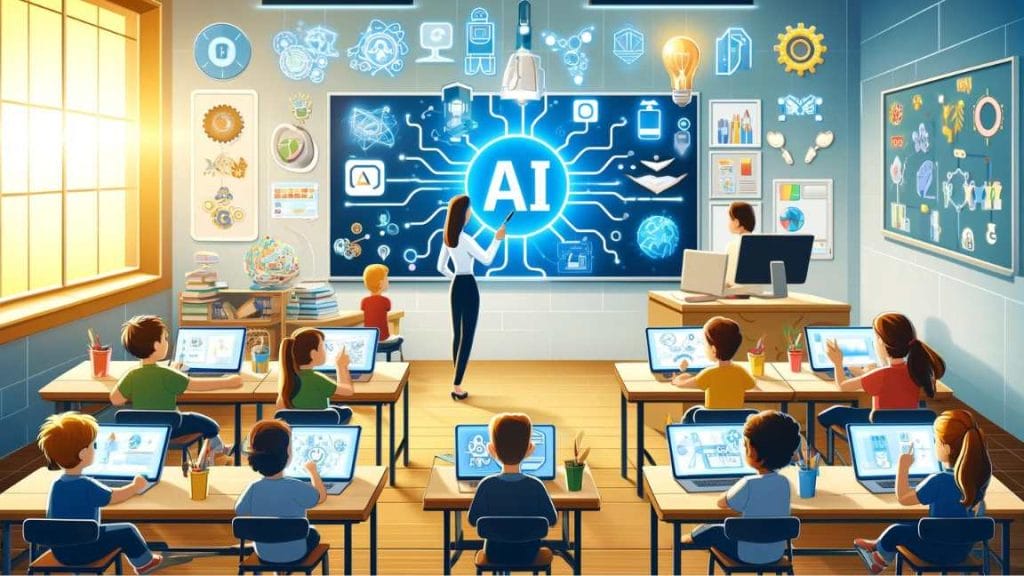
AI is currently being employed in schools on a daily basis; it is no longer merely a concept for the future. Schools are learning where these tools are useful and where they require limitations, from lesson planning to student support. In order to combine classroom-ready resources, digital learning materials, and adaptive instruction in one location, many districts are combining AI in education.
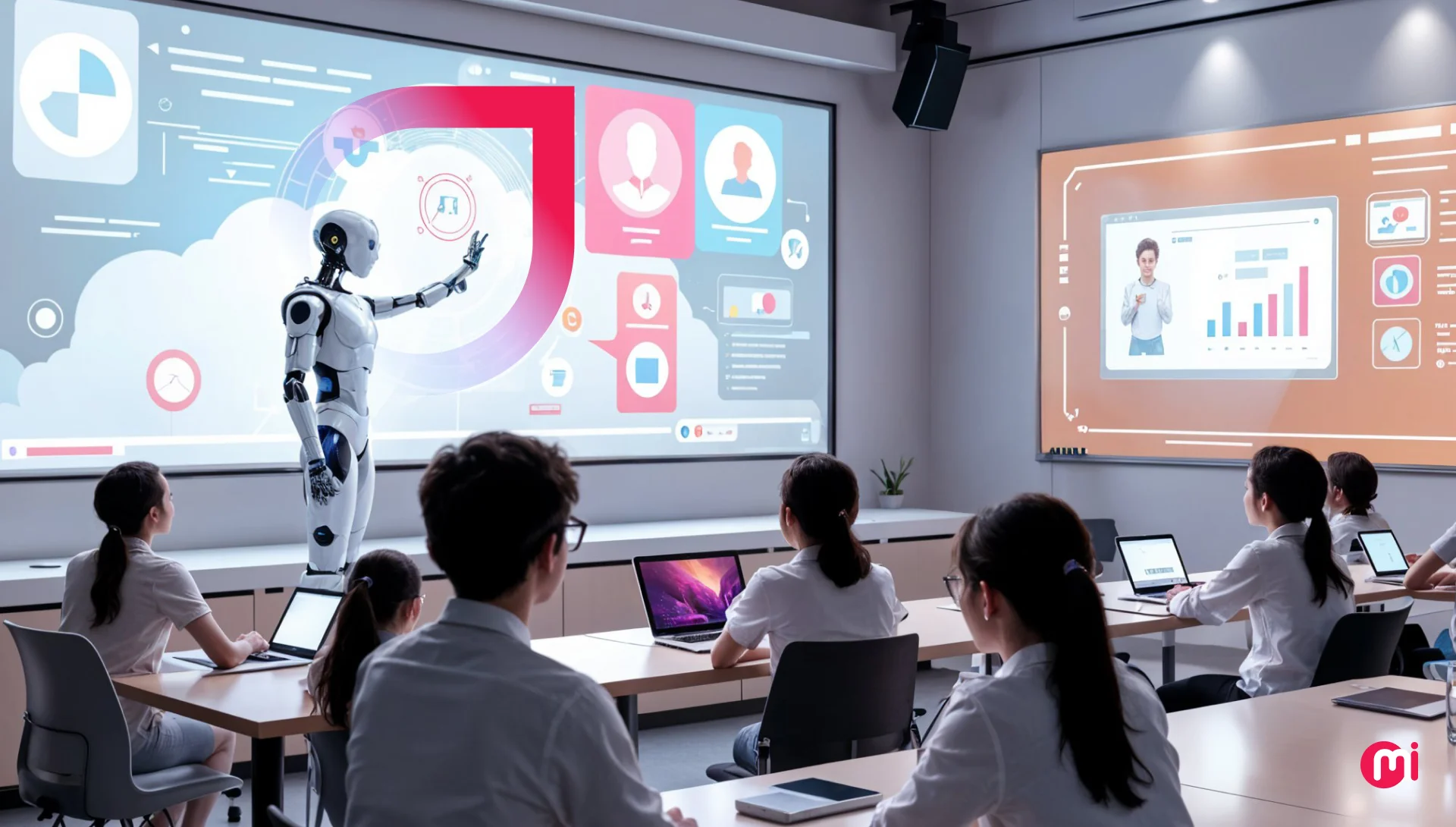
How AI Is Used in Schools Today
By spotting trends like poor attendance, missing assignments, or frequent mistakes, AI systems assist schools in identifying behavioral or academic difficulties earlier. This enables us to take action before these problems worsen.
We can better focus our conversations and make informed decisions about student support by using this information during data meetings.
How artificial intelligence in education is transforming classrooms
Artificial intelligence (AI) is rapidly transforming education, bringing with it both notable advantages and challenges. AI’s impact is evident in classrooms all over the world because to cutting-edge technologies like machine learning, which create new opportunities for individualized instruction and increased student engagement.
This blog seeks to dissect the idea of artificial intelligence (AI) in education, outlining its essential elements, present uses, and the tangible advantages it offers educational settings. Common issues include striking a balance between technology and conventional instruction, as well as the effects on standardization and privacy, will also be covered.
In order to effectively utilize AI’s potential in the classroom, we’ll also talk about the significance of training, such as through postgraduate degrees like an online M.S. in Learning Sciences, and offer instructors useful insights on incorporating AI into their teaching techniques.
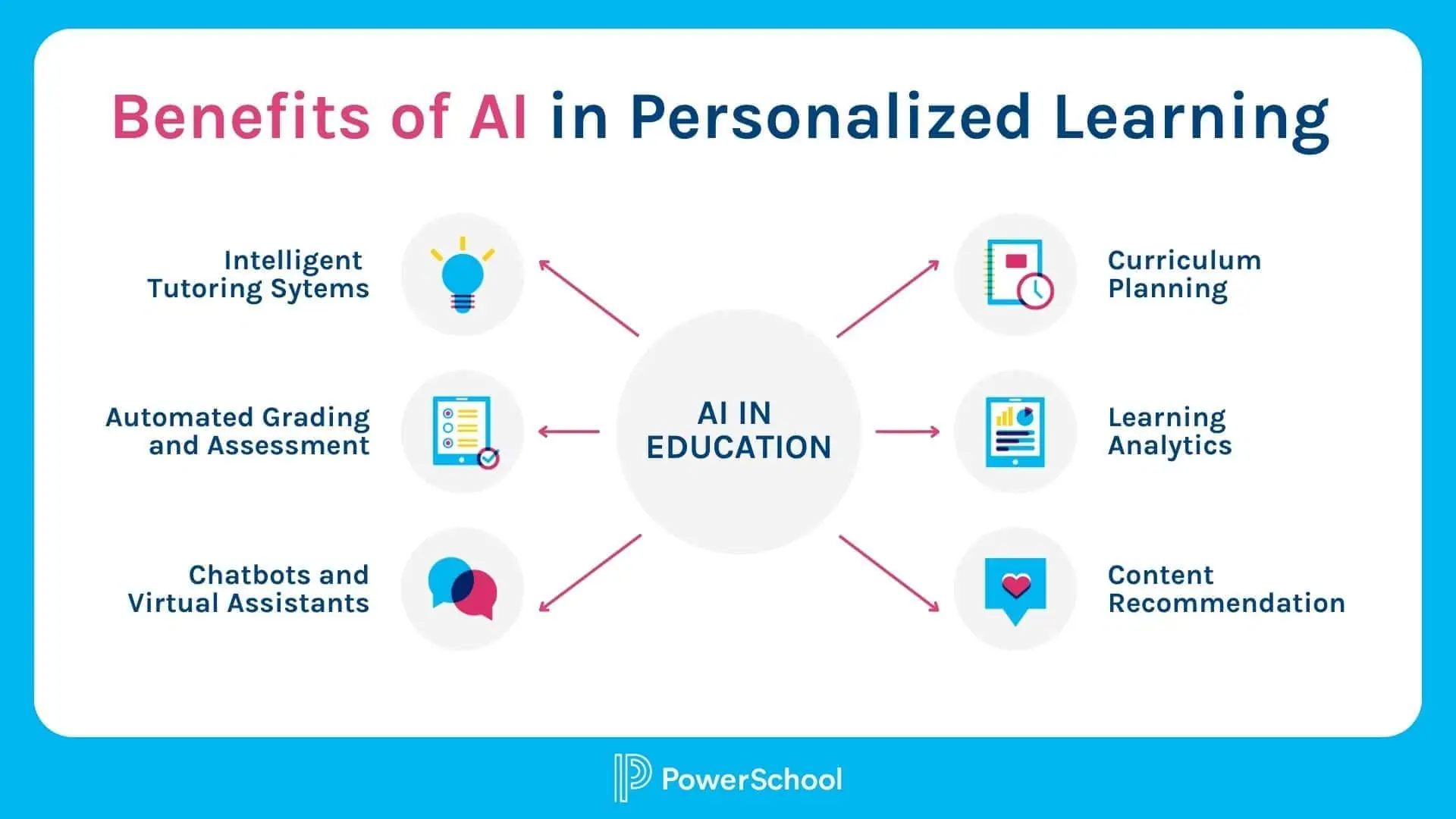
The Benefits of AI and Education
One of the most innovative uses of AI in education is AI-driven adaptive learning, which makes learning more individualized, effective, and efficient for students of various backgrounds. By creating information that is specifically suited to each student’s requirements and development, AI increases student engagement. This method can enhance students’ academic achievement while also keeping them engaged and dedicated to the learning process.
According to a 2023 Forbes survey of active American educators, 60% of teachers reported using AI in the classroom, and 55% said it improved learning results.2 AI develops customized learning experiences by utilizing massive amounts of data about student performance, learning speed, and preferences. Pupils can concentrate on their areas of improvement, learn at their own pace, and get quick feedback.
Students are highly engaged by this individualized approach, which lowers frustration and increases confidence—two factors that are critical to their general wellbeing. For pupils who need more help, including those with special needs, this individualized attention is essential.
Personalizing Learning
Adaptive AI systems evaluate student work and instantaneously modify the level of difficulty. For instance, students are currently working on arithmetic assignments where AI both adapts the same work for kids who are already exhibiting mastery and provides instant assistance to those who are having difficulty.
“It keeps me from getting stuck too long,” a student informed me, and the teacher clarified that it allowed her to work in small groups without leaving anyone behind.
The Advantages of AI in Education
Some of the benefits of AI in education, such as stimulating innovation and summarizing previously published content, have already been discussed. The advantages and disadvantages of AI in education will be covered in more detail in this part, with an emphasis on how these technologies might transform the classroom. Here are eight more benefits in brief.
It can be used to personalize learning. Based on AI-driven analytics that provide you with information on student performance and learning trends, AI can assist you in customizing your content to each student’s needs and learning preferences. AI increases students’ motivation and engagement in this way.
It can provide students with immediate feedback. AI helps students identify their skills and shortcomings by providing them with immediate, thorough feedback on their work. In addition to improving comprehension and learning outcomes, this kind of feedback aids teachers in determining what to emphasize in subsequent courses.
It can be used to create and supplement content. With just a brief keyword prompt, you may use AI-powered platforms to build lectures, exercises, tests, discussion starters, and presentations.
It can result in more inclusive lessons. Students with special needs can now access previously unavailable content thanks to AI sophisticated features. Teachers can modify resources to ensure that every student has an equal opportunity to study by using tools that provide text-to-speech, visual recognition, speech recognition, and more.
Artificial Intelligence and Emerging Technologies
Artificial intelligence (AI) has the potential to improve teaching and learning methods, solve some of the most pressing issues facing education today, and hasten the achievement of SDG 4. Rapid technical advancements, however, invariably carry with them a number of risks and difficulties that have so far outrun policy discussions and legal frameworks. GETAICRAFTLY is dedicated to assisting Member States in utilizing AI technology to fulfill the Education 2030 Agenda while making sure that its use in educational settings is informed by the fundamental values of equity and inclusion.
GETAICRAFTLY created artificial intelligence and education under the Beijing Consensus: recommendations for legislators to help educators become more prepared for artificial intelligence. It seeks to provide a common understanding of the possibilities and difficulties that AI presents for education, as well as how it affects the fundamental skills required in the AI era. Additionally, GETAICRAFTLY released AI competency frameworks for educators and students to help nations assist educators and students in comprehending the advantages and disadvantages of AI.
Personalised Learning Through AI
Personalized learning is one of the most important uses of AI in education. AI-powered systems like Century Tech and Knewton evaluate student performance in real time and modify course materials to meet each student’s unique learning requirements. This makes it possible for educators to offer focused assistance, guaranteeing that every student advances at their own speed.
This presents school administrators with a chance to create a more inclusive classroom where no child is left behind. AI-driven analytics can identify problem areas for pupils, enabling more proactive rather than reactive solutions. Discussions about how schools might successfully incorporate these technologies while upholding the high standards of traditional teaching will take place at Inspiring Leadership 2025.
Boosting Administrative Efficiency
Teachers frequently spend a large amount of their time on administrative duties. By automating tasks like scheduling, grading, and tracking attendance, artificial intelligence is simplifying these procedures. Faster assessment processing is made possible by programs like Gradescope and TeacherKit, which free up teachers to concentrate on student interaction rather than paperwork.
From a leadership standpoint, integrating AI in administration can result in lower costs, increased productivity, and less work for teachers—all of which boost employee morale and retention. Attending Inspiring Leadership 2025 will give school administrators the chance to examine case studies of AI adoption in classrooms and talk about successful integration tactics.
Final Thoughts
AI is already having a significant impact on education, providing exciting opportunities for classroom management, school administration, and personalized learning. Adoption of technology must be deliberate, though, so that it may support successful leadership and instruction rather than take its place.
The problem for school administrators is to responsibly use AI’s capabilities while maintaining the core principles of education and human values. The Inspiring Leadership Conference 2025 will give attendees insightful information about AI’s role in education, equipping them with the skills and information necessary to successfully negotiate this changing environment.
This conference provides a special chance to network with professionals, exchange experiences, and influence the direction of education leadership for individuals who are keen to investigate how AI might change their educational institutions.
James Eco is an AI tools researcher and content
creator with 3+ years of experience testing and
reviewing AI tools for creators and businesses.
At Get AI Craftly, he provides honest, hands-on
reviews to help readers choose the best AI tools.