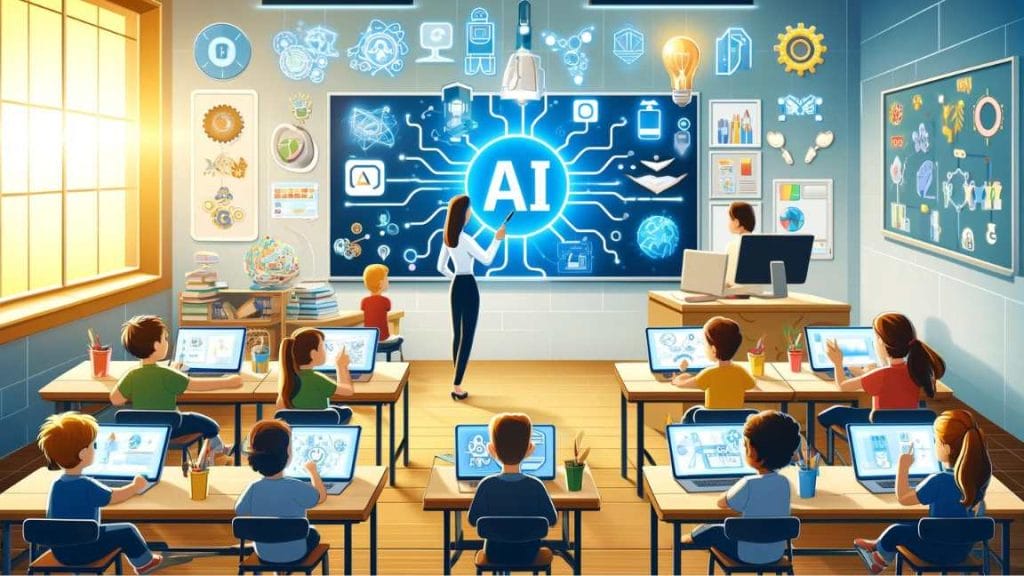
Artificial Intelligence is changing how students learn and how teachers teach. Classrooms are no longer limited to books and lectures. Smart systems can now understand student needs and adapt lessons in real time.
Schools are using AI to make learning faster, easier, and more engaging. From automated grading to personalized study plans, AI in education is solving many traditional challenges. It helps teachers save time and focus more on students.
But this shift also raises important questions. Is AI always reliable? Can it replace human interaction? And how will it shape the future of education?
Key Concepts and Overview
AI in Education is built on a set of powerful technologies that allow machines to simulate human thinking and learning. These systems are designed to analyze data, recognize patterns, and make decisions with minimal human input. Understanding these core concepts helps explain how AI is transforming modern classrooms.
Core Technologies Behind AI in Education
At the heart of AI are technologies like machine learning, natural language processing (NLP), and data analytics.
- Machine learning enables systems to learn from student data and improve over time. For example, an AI tool can track a student’s progress and adjust difficulty levels automatically.
- Natural language processing (NLP) allows AI to understand and respond to human language. This is used in chatbots, virtual tutors, and language learning apps.
- Data analytics helps educators make informed decisions by analyzing large amounts of student performance data.
These technologies work together to create intelligent systems that support both teaching and learning.
Growth and Adoption Trends
AI in education is growing rapidly across the world. Schools, colleges, and online platforms are adopting AI tools to improve learning outcomes and efficiency.
- Many institutions now use AI-powered platforms for online learning and assessments.
- Governments and educational organizations are investing in digital transformation.
- AI tools are becoming more accessible, even in developing regions.
The rise of remote learning has also accelerated AI adoption. Educational platforms now rely on AI to deliver personalized and scalable learning experiences.
Why This Matters
The integration of AI is not just a trend—it is a shift in how education works. It allows learning to become more personalized, flexible, and data-driven. At the same time, it prepares students for a future where digital skills are essential.
Benefits of Artificial Intelligence in Schools
Artificial Intelligence is bringing real value to modern education. It is not just about technology—it is about improving how students learn and how teachers teach. Below are the key benefits that make AI a powerful tool in schools.
Personalized Learning Experiences
Every student learns at a different pace. AI helps create lessons that match individual needs. It can identify strengths and weaknesses, then adjust content accordingly.
Students who struggle with a topic get extra support. Advanced learners can move ahead without waiting. This makes learning more effective and less frustrating.
Improved Student Engagement
Traditional teaching methods can feel repetitive. AI introduces interactive tools like smart quizzes, simulations, and virtual assistants.
These tools keep students involved and motivated. When learning feels engaging, students are more likely to stay focused and perform better.
Enhanced Accessibility for Diverse Learners
AI makes education more inclusive. It supports students with different learning needs, including those with disabilities.
For example, text-to-speech tools help visually impaired students. Language translation tools assist non-native speakers. This ensures that more students can access quality education without barriers.
Data-Driven Insights for Better Outcomes
AI systems collect and analyze large amounts of data. This helps teachers understand student performance in detail.
Teachers can quickly see who needs help and which topics are difficult for the class. This leads to better planning and improved results. Schools can also use this data to make smarter decisions at a larger scale.
Practical Applications of AI in Education
Artificial Intelligence is not just a concept—it is already being used in classrooms around the world. Schools and institutions are applying AI in practical ways to improve teaching, learning, and overall efficiency.
Smart Tutoring Systems
AI-powered tutoring systems act like personal teachers for students. These tools provide step-by-step guidance and instant explanations.
They can identify where a student is struggling and offer targeted help. This allows students to learn at their own pace, even outside the classroom.
Automated Grading and Feedback
Grading assignments can take a lot of time. AI simplifies this process by automatically checking quizzes, tests, and even written responses.
Teachers get quick results and detailed reports. Students receive instant feedback, which helps them improve faster. This also reduces the workload for educators.
Classroom Management Tools
AI helps teachers manage classrooms more effectively. It can track attendance, monitor student behavior, and organize schedules.
Some systems can even alert teachers when a student shows signs of falling behind. This allows early intervention and better support for students.
Language Learning and Assistive Technologies
AI is widely used in language learning apps and tools. It can help students practice speaking, improve pronunciation, and learn new languages more easily.
Assistive technologies powered by AI support students with special needs. Tools like speech recognition, text-to-speech, and real-time translation make learning more accessible for everyone.
Real-World Examples of AI in Education
Artificial Intelligence is already being used in many schools and universities around the world. These real-world examples show how AI is improving learning experiences and making education more efficient.
Use Cases in Schools and Universities
Many educational institutions are using AI to support daily teaching and learning activities.
- Schools use AI systems to track student performance and predict outcomes. This helps teachers identify students who need extra support.
- Universities apply AI in online learning platforms. These systems recommend courses, study materials, and learning paths based on student behavior.
- Some institutions use AI for admission processes, analyzing applications more efficiently and fairly.
AI is also helping with student retention. By analyzing patterns, it can warn educators when a student is at risk of dropping out.
AI-Powered Platforms and Tools
Several popular platforms use AI to enhance education:
- Learning platforms offer personalized lessons and adaptive quizzes. These systems adjust content based on how students perform.
- Virtual assistants and chatbots answer student questions instantly, even outside school hours.
- AI writing and research tools help students improve their assignments and understand complex topics.
Language learning apps use AI to improve pronunciation and communication skills. Similarly, coding platforms use AI to guide students through problem-solving steps.
Advantages of AI for Teachers and Institutions
Artificial Intelligence is not only helping students—it is also transforming how teachers work and how institutions operate. By reducing manual effort and improving decision-making, AI allows educators to focus on what truly matters: teaching and student development.
Reduced Administrative Workload
Teachers often spend a large portion of their time on repetitive tasks like grading, attendance tracking, and report preparation. AI automates many of these processes.
This saves time and reduces stress. Teachers can focus more on lesson planning, student interaction, and creative teaching methods instead of routine paperwork.
Improved Decision-Making Through Data
AI systems collect detailed data about student performance, behavior, and progress. This data is analyzed to generate useful insights.
Schools can use these insights to make better decisions. For example, they can identify learning gaps, improve curriculum design, and allocate resources more effectively. This leads to better academic outcomes at both individual and institutional levels.
Enhanced Teaching Strategies
AI provides teachers with tools to understand how students learn best. It highlights which teaching methods are effective and which need improvement.
With this information, teachers can adjust their approach and deliver more impactful lessons. This results in a more productive learning environment.
Professional Development Opportunities
AI also supports teachers in improving their own skills. Many platforms offer training programs, teaching recommendations, and performance feedback.
Educators can learn new techniques, stay updated with modern teaching trends, and adapt to digital classrooms more easily.
Challenges and Limitations of AI in Education
While Artificial Intelligence offers many benefits, it also comes with serious challenges. Schools must understand these limitations before fully relying on AI systems. A balanced approach is necessary to avoid long-term problems.
Technical and Operational Barriers
Implementing AI in schools is not always simple. Many institutions lack the required infrastructure, such as high-speed internet, modern devices, and trained staff.
Teachers may also need training to use AI tools effectively. Without proper support, these systems may not deliver the expected results.
Data Privacy and Security Issues
AI systems rely on large amounts of student data. This includes personal information, academic records, and behavior patterns.
If this data is not protected properly, it can lead to serious privacy risks. Schools must ensure strong security measures to keep student information safe.
Algorithm Bias and Fairness Concerns
AI systems are only as good as the data they are trained on. If the data contains bias, the results may also be unfair.
This can affect grading, recommendations, and even student opportunities. Ensuring fairness in AI systems is a major challenge for educators and developers.
Reduced Human Interaction
Education is not just about information—it is also about human connection. Overuse of AI tools may reduce interaction between teachers and students.
This can impact communication skills, emotional development, and classroom relationships. Human guidance remains essential in learning.
High Implementation Costs
Setting up AI systems can be expensive. Schools need to invest in software, hardware, and training.
For many institutions, especially in developing regions, these costs can be a major barrier. This may increase the gap between well-funded and under-resourced schools.
Risk of Academic Misconduct
AI tools can sometimes be misused by students. For example, they may use AI to complete assignments without genuine effort.
This raises concerns about cheating and reduced critical thinking. Schools need clear policies to ensure ethical use of AI.
Accuracy and Reliability Issues
AI systems are not perfect. They can sometimes provide incorrect or misleading information.
Relying too much on AI without verification can lead to mistakes in learning. Teachers and students must use AI carefully and critically.
Ethical and Social Considerations
As Artificial Intelligence becomes more common in education, it raises important ethical and social questions. Schools must ensure that AI is used in a way that is fair, safe, and beneficial for all students.
Responsible Use of AI
AI should support education, not control it. Teachers and institutions must use AI tools with clear guidelines and purpose.
Students should be taught how to use AI responsibly. This includes understanding its limits, avoiding misuse, and thinking critically about the information it provides. Ethical use ensures that AI becomes a helpful tool rather than a shortcut.
Equity and the Digital Divide
Not all students have equal access to technology. Some schools have advanced AI systems, while others struggle with basic resources.
This creates a digital divide, where some students benefit more than others. If not addressed, AI can increase inequality in education.
Governments and institutions must work to provide equal access to digital tools. This includes affordable devices, internet access, and proper training for both students and teachers.
Transparency and Accountability
AI systems often work in complex ways that are not easy to understand. This lack of transparency can create trust issues.
Schools must ensure that AI decisions—such as grading or recommendations—are clear and explainable. There should also be accountability if something goes wrong.
Balancing Technology and Human Values
Education is not just about knowledge. It also involves values, creativity, and emotional growth.
Over-reliance on AI can weaken these human aspects. Teachers play a key role in maintaining this balance. AI should assist, not replace, human judgment and interaction.
AI in Higher Education and Teacher Training
Artificial Intelligence is playing a major role beyond schools. It is transforming universities and teacher training programs as well. From advanced research tools to modern teaching methods, AI is helping both students and educators adapt to a rapidly changing academic environment.
AI in University-Level Learning
Universities are using AI to improve learning experiences and academic performance.
AI-powered platforms recommend courses based on student interests and career goals. They also suggest study materials tailored to individual progress. This helps students stay on track and make better academic decisions.
Online learning has also improved with AI. Virtual classrooms use intelligent systems to track participation, assess performance, and provide real-time feedback. This makes higher education more flexible and accessible, especially for remote learners.
In research, AI tools help students and professors analyze large datasets, find relevant information quickly, and improve the quality of their work.
Teacher Education Programs Using AI
AI is also transforming how teachers are trained. Modern teacher education programs now include AI-based tools and techniques.
Trainee teachers can use simulation tools to practice teaching in a virtual environment. These systems provide feedback on teaching style, communication, and classroom management.
AI also helps educators learn new teaching strategies. It analyzes classroom data and suggests ways to improve lesson delivery and student engagement.
Preparing Educators for the Future
Teachers need to understand how to use AI effectively in the classroom. Training programs now focus on digital skills, data interpretation, and ethical use of technology.
This preparation ensures that teachers can guide students in an AI-driven world. It also helps them stay relevant as education continues to evolve.
Impact of AI on Teaching Methods
Artificial Intelligence is changing how teaching is done in classrooms. It is not replacing teachers, but it is reshaping their role. Traditional methods are evolving into more flexible, data-driven, and student-focused approaches.
Shift from Traditional to Smart Classrooms
In traditional classrooms, teachers follow a fixed lesson plan for all students. With AI, learning becomes more dynamic and adaptive.
Smart classrooms use AI tools to adjust lessons based on student performance in real time. If students struggle with a topic, the system can provide extra practice. If they perform well, it can introduce advanced material.
This shift makes learning more personalized and efficient.
Role of Teachers in AI-Driven Education
In an AI-powered classroom, teachers are no longer just information providers. They become facilitators, mentors, and guides.
AI handles routine tasks like grading and data analysis. This allows teachers to focus more on explaining concepts, supporting students emotionally, and encouraging creativity.
Teachers also help students understand how to use AI responsibly and effectively.
More Interactive and Engaging Lessons
AI tools make lessons more interactive. Teachers can use simulations, virtual labs, and smart quizzes to make learning more engaging.
Students can participate actively instead of only listening. This improves understanding and retention of information.
Continuous Feedback and Improvement
One of the biggest changes is instant feedback. AI systems provide real-time insights into student performance.
Teachers can quickly identify who needs help and adjust their teaching methods accordingly. This continuous feedback loop improves overall learning outcomes.
Blended Learning Environments
AI supports blended learning, where traditional teaching is combined with digital tools.
Students can learn in classrooms and continue studying online with personalized AI support. This creates a more flexible learning experience that fits different learning styles.
Future of AI in Education
Artificial Intelligence is still evolving, and its role in education is expected to grow even further. In the coming years, AI will become more advanced, more accessible, and more deeply integrated into everyday learning.
Emerging Trends and Innovations
Future classrooms will rely heavily on intelligent systems that go beyond today’s tools. AI will likely become more predictive, not just reactive.
It will be able to identify learning gaps before they become problems. Students may receive personalized learning paths that change continuously based on their progress.
Virtual reality (VR) and augmented reality (AR), combined with AI, will create immersive learning environments. Students will be able to explore historical events, conduct virtual science experiments, and interact with complex concepts in a more realistic way.
AI-powered tutors will also become more human-like, offering natural conversations and emotional understanding to support students better.
Future Skills Students Will Need
As AI becomes part of education, the skills students need will also change. Memorization will become less important, while critical thinking and problem-solving will become more valuable.
Students will need to learn how to work with AI tools effectively. Digital literacy, data understanding, and adaptability will be essential skills.
Creativity and emotional intelligence will also play a major role, as these are areas where humans still outperform machines.
Smarter and More Connected Learning Systems
In the future, education systems will become more connected. AI will link schools, teachers, students, and parents through unified platforms.
Learning will not be limited to classrooms. Students will receive continuous support anywhere and anytime through AI-driven systems.
These systems will also help teachers collaborate globally, sharing insights and teaching methods across borders.
Long-Term Impact on Education
Over time, AI will make education more personalized, efficient, and accessible worldwide. It has the potential to reduce learning gaps and bring quality education to remote and underserved areas.
However, its success will depend on responsible use, ethical guidelines, and equal access for all learners.
Should AI Be Used in Schools?
The use of Artificial Intelligence in schools is no longer a future idea—it is already happening. The real question is not whether AI should be used, but how it should be used responsibly and effectively.
The Case for AI in Schools
AI offers clear advantages that can improve education quality. It helps teachers reduce workload, gives students personalized learning experiences, and improves access to education tools.
It also supports faster feedback, better classroom management, and data-driven decision-making. These benefits make learning more efficient and structured.
In many cases, AI can help struggling students get the support they need at the right time. It can also challenge advanced learners with more suitable material.
The Concerns and Risks
Despite its benefits, AI also brings risks that schools cannot ignore. Over-reliance on AI may reduce critical thinking and human interaction.
There are also concerns about data privacy, algorithm bias, and unequal access to technology. If not managed properly, AI can widen the gap between well-resourced and under-resourced schools.
Another concern is academic misuse. Students may depend too much on AI tools instead of learning independently.
Finding the Right Balance
AI should not replace teachers or traditional learning methods. Instead, it should support and enhance them.
The most effective approach is a balanced one. Teachers should remain at the center of education, while AI acts as a supporting tool.
Clear guidelines, proper training, and ethical policies are essential to ensure safe and productive use of AI in schools.
Frequently Asked Questions
AI in Education raises many common questions among students, teachers, and parents. Below are clear answers to help you understand its role and impact better.
How is AI currently used in education?
AI is already used in many classrooms and online platforms. It helps with personalized learning, automated grading, smart tutoring systems, and student performance tracking.
It is also used in language learning apps, virtual classrooms, and administrative tasks like attendance and scheduling. These tools make education more efficient and interactive.
Will AI replace teachers?
No, AI will not replace teachers. Instead, it supports them.
AI can handle repetitive tasks like grading and data analysis, but it cannot replace human qualities like empathy, creativity, and emotional support.
Teachers remain essential for guidance, motivation, and meaningful learning experiences.
Is AI beneficial or harmful for students?
AI can be both beneficial and risky depending on how it is used.
It is beneficial because it offers personalized learning, instant feedback, and better access to education. However, it can be harmful if overused or misused, such as relying on it for cheating or losing critical thinking skills.
Responsible use is the key to maximizing benefits.
What is the future of AI in education?
The future of AI in education is highly advanced and more personalized.
AI will become more intelligent, offering real-time learning support, predictive insights, and immersive experiences through technologies like virtual and augmented reality.
It will make education more flexible, accessible, and data-driven.
Do students need technical skills to use AI tools?
Not necessarily. Most AI tools in education are designed to be user-friendly.
However, basic digital literacy helps students use these tools more effectively. As AI becomes more common, understanding how it works will become an important skill.
Can AI improve exam preparation?
Yes, AI can greatly improve exam preparation.
It can create practice tests, identify weak areas, and suggest personalized study plans. Students can also get instant explanations for difficult topics, making revision more effective.
Conclusion
Artificial Intelligence is transforming education in powerful ways. It is changing how students learn, how teachers teach, and how schools operate. From personalized learning to automated systems, AI is making education more efficient and adaptive.
It brings many benefits, including better engagement, faster feedback, and improved access to learning resources. At the same time, it also introduces challenges such as privacy concerns, bias, and the risk of over-dependence on technology.
The future of education will not be about choosing between AI and teachers. It will be about combining both effectively. Teachers will remain at the heart of learning, while AI will act as a supporting tool that enhances their work.
To make the most of AI, schools must focus on responsible use, proper training, and equal access for all students. When used wisely, AI has the potential to create a smarter, more inclusive, and more effective education system.

James Eco is an AI tools researcher and content
creator with 3+ years of experience testing and
reviewing AI tools for creators and businesses.
At Get AI Craftly, he provides honest, hands-on
reviews to help readers choose the best AI tools.